Today's
EarthStation1.com 15% Off Commemorative Memorial Title: TV
Commercials: The Classics Vol. 2 DVD, Video Download, USB Drive
Today, June 26, 2026
June 26: National Coconut Day: -- A day
to savor what the coconut offers in sweet support for our bodies
in its several ways. Coconut oil alone falls into the superfood
category due to its medium-chain triglyceride (MCTs) content and
all that they seem to do. Whether supporting a weight loss
program, moisturizing skin, and hair or metabolizing into energy,
coconut oil plays a significant role in your body. We use the
whole coconut in many different forms for our bodies and everyday
cooking. From shredded coconut to milk, cream, water, and oil,
each provides essential nutrients and flavor. Its anti-viral and
anti-microbial properties are notable as well. Coconut is rich in
fiber, Vitamin B6, iron, and minerals like magnesium, manganese,
phosphorus, selenium, and zinc. The oil from coconut moisturizes
our skin and also helps keep our skin clear and hair silky, too.
Of course, in the kitchen, we love coconut! Beyond baked goods,
coconut infuses sweet flavor to our cooking, and because the MCTs
in coconut oil doesn't absorb in the body as fat, it is an ideal
alternative to other oils and fats. The flavor of coconut oil
makes the best air-popped popcorn. Add coconut milk to your curry
recipe and win rave reviews! Those who are lactose intolerant and
craving ice cream know that coconut milk also makes an excellent
substitute for creamy homemade ice cream. And of course, it's not
summer without a pina colada! Beyond the fruit and water of the
coconut that we consume as food, consumers also use the husk and
shells as a potting medium, carbon filtration, charcoal, bio-fuel,
and even organic cat litter. Another use for the husks is the
production of coir, which manufacturers use in making mattresses,
doormats, and more. Enjoy the benefits of coconut, and share your
favorite ways to use it. Coconut Coalition of the Americas (CCA)
was founded in 2017 when coconut industry stakeholders realized
there needed to be one unified voice for the North American
coconut trade. Industry members came together to steward the
category and promote the facts about coconut oil and coconut
products. Follow National Coconut Day by using #NationalCoconutDay
on social media. In 2019, the Coconut Coalition of the Americas
founded National Coconut Day to celebrate the mighty coconut and
increase awareness of its benefits. It's more than just a baking
staple. On Sale @ 15% Off Discount Till Midnight PT!
https://store.earthstation1.com/tv-commercials-the-classics-vol-2-dv2.html
Today's
EarthStation1.com 15% Off Commemorative Memorial Title: TV
Commercials: The Classics Vol. 6 DVD, Video Download, USB Drive
Today, June 26, 2026
June 26: National Chocolate Pudding Day:
-- An annual day to get all excited for a serving of this creamy
dessert! Children and adults alike love chocolate pudding and have
done so for generations. Usually eaten as a snack or dessert,
chocolate pudding is also used as a filling for chocolate creme
pie. Chocolate pudding is usually made with milk and sugar,
flavored with chocolate and vanilla then thickened with flour or
cornstarch. However, some recipes do use eggs when making the
pudding. Historically, chocolate pudding is a variation of
chocolate custard, using starch as a thickener instead of eggs.
The 1903 edition of Mary Harris Frazer's Kentucky Receipt Book and
the 1918 edition of Fannie Farmer's Boston Cooking School Cook
Book, both printed recipes for the earlier version, using both
eggs and flour. In 1934, General Foods (Jello) introduced a
chocolate pudding mix as "Walter Baker's Dessert."
However, in 1936, they renamed it "Pickle's Pudding."
Chocolate pudding can be purchased ready-made and sold in grocery
stores, convenience stores, and gas stations. The popular brands
include Jell-O by the Kraft Foods Corporation and Snack Pack by
Hunt's. To observe National Chocolate Pudding Day, enjoy some
delicious Chocolate Pudding as a dessert or as a snack; rry making
homemade Chocolate Pudding; mix it wasbroken cookies or candy
bars, and whipped cream to create a trifle dessert; use chocolate
pudding to make parfaits, or mix it with other creamy desserts
like mousse and custard; and share your favorite way to enjoy
chocolate pudding by using #NationalChocolatePuddingDay on social
media. On Sale @ 15% Off Discount Till Midnight PT!
https://store.earthstation1.com/tv-commercials-the-classics-vol-6-dv6.html
Today's
EarthStation1.com 15% Off Commemorative Memorial Title: American
Business Films Of The 20th Century MP4 Video Download DVD
Today, June 26, 2026
June 26: World Refrigeration Day: -- A
day to celebrate and appreciate the refrigeration sector for
making our lives better than ever before! Did you know that the
first mechanical refrigerator was made more than 300 years ago?
Before that, people depended on storing edibles in cellars or
underwater to keep them cool and safe from bacteria. Modern
refrigeration revolutionized the way of living, and it is
considered an essential part of life. Now nearly all households in
the United States have at least one refrigerator, according to a
2009 report by the U.S Department of Energy. Refrigeration
completely changed the way people live their lives. It gave them
comfort, better food and drink storage options, and even helped in
saving lives. This wonder of science and technology is everywhere
around us. It helps the surgeon operate in air-conditioned
hospitals, which reduces the possibility of infection by bacteria,
our food and drinks remain safe to consume even after weeks, it is
used in spaceships to control the temperature, and it is even used
for sports! On World Refrigeration Day, we celebrate the wonder of
refrigeration. It was first celebrated on June 26, 2019.
Refrigeration has always been a necessity for people through the
ages. People in China used to cut and store ice around 1000 B.C.
Indians and Egyptians kept earthen pots outside at night to form
ice. In the 18 century, Europeans wrapped salted ice in flannel
and kept it underground. The onset of modern refrigeration started
with William Cullen, who observed the cooling tendency of the
evaporation process in 1720. In 1835, Jacob Perkins, the "father
of the refrigerator," was granted the first patent for a
vapor compression cycle, which used liquid ammonia. The title of
his patent was "apparatus and means for producing ice, and in
colling fluids." The popularity of refrigeration grew by
leaps and bounds in the 19 century. It was widely used first by
breweries and then by the meat industry. Slowly it became
essential for normal households. On Sale @ 15% Off Discount Till
Midnight PT!
https://store.earthstation1.com/american-business-films-1910s1960s-3-dual-laye191019603.html
Today's
EarthStation1.com 15% Off Commemorative Memorial Title: Abbott And
Costello Old Time Radio MP3 Collection DVD, Download, USB
Today, June 26, 2026
June 26: National Beauticians Day: -- Get
together with your friends or family and pamper yourselves, while
supporting the beauticians whose training and hard work help us
look our best. We all need a little help looking our best now and
then, and National Beauticians Day celebrates those cosmetological
experts who can help hide our flaws and bring out the absolute
best of our beauty. There are multiple disciplines within the
realm of cosmetology, including such areas as skin care,
manicures, electrology, hair care, and cosmetic application. When
it's a special day for you, it's always good to remember that
without these, we could be locked in a perpetual bad hair day. The
world of fashion and style is in constant flux, evolving with the
changing of the seasons, and these wonderful navigators of the
beauty world will see you through. Cosmetics is one of the
foundations of the beauticians art, with the knowledge of how
colors, skin tones, and hair color all come together to create the
unique pallete that is your skin. Cosmetics have to be carefully
selected to enhance your natural features, with considerations
needing to be taken for dry skin, oily skin, and the always tricky
combination skin. While most people think merely of the colorants
that are standard 'make-up', cosmetics actually include those
products used for treating the various issues tied into the nature
of your skin. Skin care is done through a variety of methods, and
National Beauticians Day is a great time to check in with your
cosmetologist to help you adjust for your new look. There are
several processes involved in properly caring with your skin,
including regular cleansings, masks (such as clay-based, peel
masks, sheet masks, and others). Exfoliation helps to get rid of
dead skin to help the fresh new skin underneath truly shine, or to
even out rough spots on your skin. Combining these habits with
Toning, moisturizing, and products to protect your skin from skin
and wind damage. But what is perfect skin without the glowing,
healthy hair to back it up? Just like your skin, hair has
different characteristics, some is naturally curly, or long and
straight, some is fine, and others thick, and just like face, hair
can suffer from being oily or dry. There's so much that can be
done with hair, with coloring being one of the most popular
options, serving to perfectly compliment your natural coloration.
There are hundreds of different hair styles, each one serving to
compliment your face in a different way. National Beauticians Day
is a great opportunity to consult them on what styles would look
best on you. Another great way to celebrate is to get together
with your friends, men and women alike, and head on down to your
local nail salon or spa for a relaxing mani-pedi. Men rarely take
an opportunity for this level of pampering, and that's a terrible
shame. Convince your friends to come on down with you, and you can
guarantee they'll keep coming back for more. For bonus points, try
to convince them to get their nails not just shaped, but to get at
least a clear-coat, if not a full colored coat! National
Beauticians Day can also be an opportunity for you to take the
plunge and get rid of those unsightly and bothersome areas of body
hair. Electrology is another element of the beautician's art,
allowing you to take control of your appearance by permanently
removing unwanted hair in troublesome areas. Never worry about
shaving your armpits, or having an unsightly bikini lines at the
beach or pool. With the application of electrolisis, you'll be
free from these concerns forever! So pop in to see your
Beautician, and bring them cards or flowers, or even treat them to
a day at the spa with a gift certificate! On Sale @ 15% Off
Discount Till Midnight PT!
https://store.earthstation1.com/abbott-and-costello-old-time-radio-mp3-dv3.html
Today's
EarthStation1.com 15% Off Commemorative Memorial Title: American
Anti-Drug Films & Broadcasts Set MP4 Video Download 2 DVD Set
Today, June 26, 2026
June 26: World Drug Day (The
International Day Against Drug Abuse And Illicit Trafficking): --
Understanding the dangers and effects of substances is crucial for
making informed choices and protecting your health. Affecting
millions of people worldwide, illicit drug use and abuse can have
a wide range of harmful effects on individuals and communities,
which may include causing addictions, creating financial distress,
ruining health and well-being, upending careers and devastating
families. Sponsored by the UN, World Drug Day is an annual event
that seeks to draw attention to the havoc that drugs can wreak,
encouraging individuals to make better, healthier choices for a
drug-free world. World Drug Day was established by the United
Nations General Assembly in 1987 and the inaugural event was
celebrated the following June 26. The event was founded as an
expression of the determination of the UN to cooperate and
strengthen their actions to create a society that is free of drug
abuse. The United Nations continues to observe World Drug Day,
encouraging individuals, communities, governments, schools and
various organizations to not only educate young people about the
dangers of drug use, but also promote healthy ways to deal with
life's problems without turning to drugs. Each year, the
organizers from the United Nations offer a theme that helps to
provide focus and garner traction for the promotion of World Drug
Day. Some of the past themes over the years have included: A
Message of Hope: Drug Use Disorders are Preventable and Treatable;
Value Yourself_Make Healthy Choices; Make Health Your 'New High'
In Life, Not Drugs; and Better Knowledge for Better Care. On Sale
@ 15% Off Discount Till Midnight PT!
https://store.earthstation1.com/classic-american-antidrug-films-2-dual-layer-dvd-se3.html
Today's
EarthStation1.com 15% Off Commemorative Memorial Title: Survive:
Torture! 3 State Torture Victims Testimonies MP4 Download DVD
Today, June 26, 2026
June 26, 1987: United Nations
International Day In Support of Victims Of Torture: -- A day to
raise critical awareness about torture and to rally support. It
establishes the premise that torture is a crime against humanity.
The day is also dedicated to the victims of torture, who have
often been swept aside in endless narratives. The day was brought
into existence in 1997 after a decades-long campaign, which
started with the 1987 Convention Against Torture. June 26
illuminates the necessary steps that we as a society can take to
eliminate the use of torture and the ways in which we can support
the victims of this heinous crime. Torture, a crime under
international law, is still prevalent in many parts of the world.
The United Nations defines torture as the intentional infliction
of physical or mental suffering to a person to exert some
information or execute a punishment. As per the U.N., torture is
counted as one of the vilest acts that a person can perpetrate on
their fellow human beings. The inhumanity of torture has long been
justified as a means to an end. But leading psychologists have
decried torture as effective and inept to accomplish any goal. The
quest to declare torture a crime has been long championed in the
halls of the U.N. In 1987, the Convention Against Torture came
into effect, which regarded torture as a degrading treatment that
should be deemed illegal. The U.N. General Assembly marked June 26
as the official United Nations International Day in Support of
Victims of Torture in 1997. The day seeks to end the barbaric
adoption and acceptance of torture. Many global organizations,
including Amnesty International and the International
Rehabilitation Council for Torture Victims, organize events around
the world to raise awareness about the adverse impact of torture
on humans. On June 26, a collective pledge is taken to raise
awareness about the urgency to declare torture as a crime at a
national level in the remaining countries. For the victims, the
road to recovery from the abuse inflicted by torture is rather
difficult. Through the declaration of an international day in
support of the victims, the U.N. raises special funds that focus
on their healing and recovery with practical assistance and
therapy. On Sale @ 15% Off Discount Till Midnight PT!
https://store.earthstation1.com/survive-torture-3-state-torture-victims-testimonies-mp4-download-d34.html
Today's
EarthStation1.com 15% Off Commemorative Memorial Title: The Mongol
Hordes: Storm From The East TV Series DVD MP4 USB Drive
Today, June 26, 2026
June 26, 1243: The Mongols: The Mongol
Empire: Mongol Invasions And Conquests: The Mongol Invasion Of
West Asia: The Mongol Invasions Of Anatolia: The Battle Of Kose
Dag: -- Mongol Empire invaders fight against the Sultanate of Rum,
a Turko-Persian Sunni Muslim state established in the parts of
Anatolia which had been conquered from the Byzantine Empire by the
Seljuq dynasty's Seljuk Empire, at the defile (a narrow pass or
gorge between mountains or hills) of Kose Dag, a location between
the provinces of Erzincan and Gumushane in modern northeastern
Turkey. The Mongols achieved a decisive victory, resulting in
turmoil throughout Anatolia that led directly to the decline and
disintegration of the Seljuq state. The Empire of Trebizond, a
rump state of the Byzantine Empire located at various locations
around the Black Sea and ally to the Seljuks, became a vassal
state of the Mongol Empire. Furthermore, the adjacent Armenian
Kingdom of Cilicia became a vassal state of the Mongols. Real
power over Anatolia was thereafter exercised by the Mongols. On
Sale @ 15% Off Discount Till Midnight PT!
https://store.earthstation1.com/the-mongol-hordes-storm-from-the-east-tv-series-dvd-mp4-usb-driv4.html
Today's
EarthStation1.com 15% Off Commemorative Memorial Title: Monarchy
In The UK: British Royal History DVD, Download, USB Drive
Today, June 26, 2026
June 26, 1483: The English Monarchy (The
Monarchy Of The Kingdom Of England): Royal Accessions: Successions
To The English Throne: -- Richard III becomes King of England,
following a declaration by an assembly of both lords and commoners
to this effect that further declared the de jure king, 12-year-old
Edward V, was an illegitimate king due to his parents' marriage
having been declared bigamous. He was crowned on July 6, 1483.
Richard Plantagenet (October 2, 1452 - August 22, 1485), King
Richard III of England from 1483 until his death, was King of
England and Lord of Ireland. He was the last king of the House Of
York and the last of the Plantagenet dynasty. His defeat and death
at the Battle Of Bosworth Field, the last decisive battle of the
Wars Of The Roses, marked the end of the Middle Ages in England.
He is the protagonist of Richard III, one of William Shakespeare's
history/tragedy plays. Richard was created Duke of Gloucester in
1461 after the accession of his brother King Edward IV. In 1472,
he married Anne Neville, daughter of Richard Neville, 16th Earl of
Warwick. He governed northern England during Edward's reign, and
played a role in the invasion of Scotland in 1482. When Edward IV
died in April 1483, Richard was named Lord Protector of the realm
for Edward's eldest son and successor, the 12-year-old Edward V.
Arrangements were made for Edward V's coronation on 22 June 1483.
Before the king could be crowned, the marriage of his parents was
declared bigamous and therefore invalid. Now officially
illegitimate, their children were barred from inheriting the
throne. On 25 June, an assembly of lords and commoners endorsed a
declaration to this effect, and proclaimed Richard as the rightful
king. He was crowned on 6 July 1483. Edward and his younger
brother Richard of Shrewsbury, Duke of York, called the "Princes
in the Tower", were not seen in public after August, and
accusations circulated that they had been murdered on King
Richard's orders, under the Tudor rule a few years later. There
were two major rebellions against Richard during his reign. In
October 1483, an unsuccessful revolt was led by staunch allies of
Edward IV and Richard's former ally, Henry Stafford, 2nd Duke of
Buckingham. Then, in August 1485, Henry Tudor and his uncle,
Jasper Tudor, landed in southern Wales with a contingent of French
troops, and marched through Pembrokeshire, recruiting soldiers.
Henry's forces defeated Richard's army near the Leicestershire
town of Market Bosworth. Richard was slain, making him the last
English king to die in battle. Henry Tudor then ascended the
throne as Henry VII. Historians consider Bosworth Field to be a
defining moment of English and Welsh history. Richard's corpse was
taken to the nearby town of Leicester and buried without ceremony.
His original tomb monument is believed to have been removed during
the English Reformation, and his remains were wrongly thought to
have been thrown into the River Soar. In 2012, an archaeological
excavation was commissioned by the Richard III Society on the site
previously occupied by Grey Friars Priory. The University of
Leicester identified the skeleton found in the excavation as that
of Richard III as a result of radiocarbon dating, comparison with
contemporary reports of his appearance, identification of trauma
sustained at the Battle of Bosworth and comparison of his
mitochondrial DNA with that of two matrilineal descendants of his
sister Anne. He was reburied in Leicester Cathedral on March 26,
2015. The Battle Of Bosworth Field (or Battle of Bosworth) was the
last significant battle of the Wars Of The Roses, the civil war
between the Houses of Lancaster and York that extended across
England in the latter half of the 15th century. Fought on August
22, 1485, the battle was won by the Lancastrians. Their leader
Henry Tudor, Earl of Richmond, by his victory became the first
English monarch of the Tudor dynasty. On Sale @ 15% Off Discount
Till Midnight PT!
https://store.earthstation1.com/monarchy-in-the-uk-british-royal-family-history-films-dvd.html
Today's
EarthStation1.com 15% Off Commemorative Memorial Title: Aviation
History Films Collection DVD MP4 Video Download
Today, June 26, 2026
June 26, 1794: The Age Of Enlightenment
(The Enlightenment, The Age Of Reason): The Age Of Revolution: The
Atlantic Revolutions: The French Revolution: The French
Revolutionary And Napoleonic Wars (The Great French War) (The
French Revolutionary Wars, The Napoleonic Wars): The Napoleonic
Wars: The Coalition Wars: The War Of The First Coalition: The Low
Countries Theatre Of The War Of The First Coalition (The Flanders
Campaign): The Battle Of Fleurus: Aviation: The History Of
Aviation: The History Of Military Aviation: Lighter Than Air
Aviation (Lighter-Than-Air-Aviation): The History Of Ballooning:
-- The Battle Of Fleurus marked the first successful military use
of aircraft that influenced the result of a battle when the French
employ the reconnaissance balloon l'Entreprenant (French: "The
Entrepreneur"). The Battle Of Fleurus was an engagement
between the army of the First French Republic and the Coalition
Army (Britain, Hanover, Dutch Republic, and Habsburg Monarchy).
Both sides had forces in the area of around 80,000 men but the
French were able to concentrate their troops and defeat the First
Coalition. The Allied defeat led to the permanent loss of the
Austrian Netherlands and to the destruction of the Dutch Republic.
The battle marked a turning point for the French army, which
remained ascendant for the rest of the War of the First Coalition.
A French reconnaissance balloon, l'Entreprenant, operated by the
Aerostatic Corps, continuously informed General of Division (MG)
Jean-Baptiste Jourdan about Austrian movements, and helped bring
about victory. French painter and lithographer Jean-Baptiste
Mauzaisse painted the battle, complete with the balloon
l'Entreprenant, in the Galerie des Batailles at the Palace of
Versailles. On Sale @ 15% Off Discount Till Midnight PT!
https://store.earthstation1.com/aviation-history-films-2-dual-layer-dvd-se2.html
Today's
EarthStation1.com 15% Off Commemorative Memorial Title: The
Monarchy: British Royal Family History TV Series DVD MP4 USB Drive
Today, June 26, 2026
June 26, 1830: The English Monarchy (The
Monarchy Of The Kingdom Of England): Royal Accessions: Successions
To The English, Scottish, Irish And Hanoverian Thrones: -- William
Henry Hanover becomes William IV becomes King Of The United
Kingdom Of Great Britain And Ireland and King Of Hanover upon the
death of his older brother George, reigning until his death in
1765. ========= #DOTD: George IV Of The United Kingdom, King Of
The United Kingdom Of Great Britain And Ireland and King Of
Hanover from January 29, 1820 until his death (b. August 12, 1762)
#dies at 3:15 AM at Windsor Castle, Berkshire, England, United
Kingdom, aged 67. At about 3 AM, George awoke and passed a bowel
movement, "a large evacuation mix'd with blood", then
sent for his doctor Sir Henry Halford, allegedly calling to his
servants "Sir Henry! Sir Henry! Fetch him; this is death!"
Accounts of George's final moments and last words vary. According
to Halford, following his arrival and that of Sir William
Knighton, the King's "lips grew livid, and he dropped his
head on the page's shoulder ... I was up the stairs in five
minutes, and he died but eight minutes afterwards." Other
accounts state the King placed his hands on his stomach and said
"Surely, this must be death", or that he called out
"Good God, what is this?", clasped his page's hand, and
said "my boy, this is death". An autopsy conducted by
his physicians revealed George had died from upper
gastrointestinal bleeding resulting from the rupture of a blood
vessel in his stomach A large tumour "the size of an orange"
was found attached to his bladder; his heart was enlarged, had
heavily calcified valves and was surrounded by a large fat
deposit. The King was buried in St George's Chapel, Windsor
Castle, on July 15. His only legitimate child, Princess Charlotte,
predeceased him in 1817, as did his childless younger brother
Prince Frederick in 1827, so he was succeeded by another younger
brother, William IV. George IV was born George Augustus Frederick
Hanover at St James's Palace, London, England, Great Britain. At
the time of his accession to the throne, he was acting as prince
regent for his father, George III, having done so since February
5, 1811 during his father's final mental illness. George IV was
the eldest child of King George III and Queen Charlotte. He led an
extravagant lifestyle that contributed to the fashions of the
Regency era, and his associates such as the dandy Beau Brummell
and the architect John Nash created the Regency style. He was a
patron of new forms of leisure, style and taste. He commissioned
John Nash to build the Royal Pavilion in Brighton and remodel
Buckingham Palace, and commissioned Jeffry Wyatville to rebuild
Windsor Castle. George's charm and culture earned him the title
"the first gentleman of England", but his dissolute way
of life and poor relationships with his parents and his wife,
Caroline of Brunswick, earned him the contempt of the people and
dimmed the prestige of the monarchy. He excluded Caroline from his
coronation and asked the government to introduce the unpopular
Pains and Penalties Bill in an unsuccessful attempt to divorce
her. George's rule was tarnished by scandal and financial
extravagance. His ministers found his behaviour selfish,
unreliable and irresponsible and he was strongly influenced by
favourites. During most of George's regency and reign, Lord
Liverpool controlled the government as Prime Minister of the
United Kingdom. Liverpool's government presided over Britain's
ultimate victory over Napoleon and negotiated a peace settlement
with the French. After Liverpool's retirement, George IV was
forced to accept Catholic emancipation despite opposing it. His
only legitimate child, Princess Charlotte, predeceased him in
1817, as did his childless younger brother Prince Frederick in
1827, so he was succeeded by another younger brother, William IV.
On Sale @ 15% Off Discount Till Midnight PT!
https://store.earthstation1.com/the-monarchy-3-part-british-royal-family-tv-series-dvd-mp4-u34.html
Today's
EarthStation1.com 15% Off Commemorative Memorial Title: Monarchy
In The UK: British Royal History MP4 Video Download DVD Set
Today, June 26, 2026
June 26, 1830: The English Monarchy (The
Monarchy Of The Kingdom Of England): Royal Accessions: Successions
To The English, Scottish, Irish And Hanoverian Thrones: -- William
Henry Hanover becomes William IV becomes King Of The United
Kingdom Of Great Britain And Ireland and King Of Hanover upon the
death of his older brother George, reigning until his death in
1765. ========= #DOTD: George IV Of The United Kingdom, King Of
The United Kingdom Of Great Britain And Ireland and King Of
Hanover from January 29, 1820 until his death (b. August 12, 1762)
#dies at 3:15 AM at Windsor Castle, Berkshire, England, United
Kingdom, aged 67. At about 3 AM, George awoke and passed a bowel
movement, "a large evacuation mix'd with blood", then
sent for his doctor Sir Henry Halford, allegedly calling to his
servants "Sir Henry! Sir Henry! Fetch him; this is death!"
Accounts of George's final moments and last words vary. According
to Halford, following his arrival and that of Sir William
Knighton, the King's "lips grew livid, and he dropped his
head on the page's shoulder ... I was up the stairs in five
minutes, and he died but eight minutes afterwards." Other
accounts state the King placed his hands on his stomach and said
"Surely, this must be death", or that he called out
"Good God, what is this?", clasped his page's hand, and
said "my boy, this is death". An autopsy conducted by
his physicians revealed George had died from upper
gastrointestinal bleeding resulting from the rupture of a blood
vessel in his stomach A large tumour "the size of an orange"
was found attached to his bladder; his heart was enlarged, had
heavily calcified valves and was surrounded by a large fat
deposit. The King was buried in St George's Chapel, Windsor
Castle, on July 15. His only legitimate child, Princess Charlotte,
predeceased him in 1817, as did his childless younger brother
Prince Frederick in 1827, so he was succeeded by another younger
brother, William IV. George IV was born George Augustus Frederick
Hanover at St James's Palace, London, England, Great Britain. At
the time of his accession to the throne, he was acting as prince
regent for his father, George III, having done so since February
5, 1811 during his father's final mental illness. George IV was
the eldest child of King George III and Queen Charlotte. He led an
extravagant lifestyle that contributed to the fashions of the
Regency era, and his associates such as the dandy Beau Brummell
and the architect John Nash created the Regency style. He was a
patron of new forms of leisure, style and taste. He commissioned
John Nash to build the Royal Pavilion in Brighton and remodel
Buckingham Palace, and commissioned Jeffry Wyatville to rebuild
Windsor Castle. George's charm and culture earned him the title
"the first gentleman of England", but his dissolute way
of life and poor relationships with his parents and his wife,
Caroline of Brunswick, earned him the contempt of the people and
dimmed the prestige of the monarchy. He excluded Caroline from his
coronation and asked the government to introduce the unpopular
Pains and Penalties Bill in an unsuccessful attempt to divorce
her. George's rule was tarnished by scandal and financial
extravagance. His ministers found his behaviour selfish,
unreliable and irresponsible and he was strongly influenced by
favourites. During most of George's regency and reign, Lord
Liverpool controlled the government as Prime Minister of the
United Kingdom. Liverpool's government presided over Britain's
ultimate victory over Napoleon and negotiated a peace settlement
with the French. After Liverpool's retirement, George IV was
forced to accept Catholic emancipation despite opposing it. His
only legitimate child, Princess Charlotte, predeceased him in
1817, as did his childless younger brother Prince Frederick in
1827, so he was succeeded by another younger brother, William IV.
========= William IV, King Of The United Kingdom Of Great Britain
And Ireland, King Of Hanover from June 26, 1830 until his death.
nicknamed "The Sailor King" (June 20, 1837 - August 21,
1765) was born William Henry Hanover in the early hours of the
morning at Buckingham House (modern Buckingham Palace), the third
child and son of King George III and Queen Charlotte. He had two
elder brothers, George, Prince of Wales, and Prince Frederick
(later Duke of York and Albany) and was not expected to inherit
the Crown. William succeeded his elder brother George IV, becoming
the last king and penultimate monarch of Britain's House Of
Hanover. William served in the Royal Navy in his youth, spending
time in British North America and the Caribbean,. In 1789, he was
created Duke Of Clarence and St Andrews. Between 1791 and 1811, he
cohabited with the courtesan actress Dorothea Jordan, with whom he
had ten children, all of whom took the surname FitzClarence. In
1818, he married Princess Adelaide of Saxe-Meiningen. William
remained faithful to Adelaide during their marriage. In 1827, he
was appointed Britain's first Lord High Admiral since 1709. As his
two elder brothers died without leaving legitimate issue, William
inherited the throne when he was 64 years old. His reign saw
several reforms: the Poor Law was updated, child labour
restricted, slavery abolished in nearly all of the British Empire,
and the electoral system refashioned by the Reform Acts of 1832.
Although William did not engage in politics as much as his brother
or his father, he was the last British monarch to appoint a prime
minister contrary to the will of Parliament. He granted his German
kingdom a short-lived liberal constitution. William had no
surviving legitimate children at the time of his death, so he was
succeeded by his niece Victoria in the United Kingdom and his
brother Ernest Augustus in Hanover. Both Kine William and Queen
Adelaide were fond of their niece, Princess Alexandrina Victoria
Of Kent, the future Queen Victoria. Their attempts to forge a
close relationship with the girl were frustrated by the conflict
between the King and Victoria's widowed mother, the Duchess Of
Kent And Strathearn. The King, angered at what he took to be
disrespect from the Duchess to his wife, took the opportunity at
what proved to be his final birthday banquet in August 1836 to
settle the score. Speaking to those assembled at the banquet, who
included the Duchess and Princess Victoria, William expressed his
hope that he would survive until Victoria was 18 so that her
mother the Duchess would never be regent. He said, "I trust
to God that my life may be spared for nine months longer ... I
should then have the satisfaction of leaving the exercise of the
Royal authority to the personal authority of that young lady,
heiress presumptive to the Crown, and not in the hands of a person
now near me, who is surrounded by evil advisers and is herself
incompetent to act with propriety in the situation in which she
would be placed." The speech was so shocking that Victoria
burst into tears, while her mother sat in silence and was only
with difficulty persuaded not to leave immediately after dinner
(the two left the next day). William's outburst undoubtedly
contributed to Victoria's tempered view of him as "a good old
man, though eccentric and singular". William survived, though
mortally ill, to the month after Victoria's coming of age. "Poor
old man!", Victoria wrote as he was dying, "I feel sorry
for him; he was always personally kind to me." William was
"very much shaken and affected" by the death of his
eldest daughter, Sophia, Lady de L'Isle and Dudley, in childbirth
in April 1837. Queen Adelaide attended the dying William
devotedly, not going to bed herself for more than ten days.
William died in the early hours of the morning at Windsor Castle,
aged 71 where he was buried in the Royal Vault at St George's
Chapel. On Sale @ 15% Off Discount Till Midnight PT!
https://store.earthstation1.com/monarchy-in-the-uk-british-royal-history-mp4-video-download-dvd-set.html
Today's
EarthStation1.com 15% Off Commemorative Memorial Title: The
Western Tradition TV Series DVD, MP4 Video Download, USB Drive
Today, June 26, 2026
June 26, 1848: The Age Of Enlightenment
(The Enlightenment, The Age Of Reason): The Age Of Revolution: The
Revolutions Of 1848 (The Springtime Of The Peoples, The Springtime
Of Nations): France: The History Of France: The Modern History Of
France: Rebellions In France: Labor Disputes In France: The June
Days Uprising (French: Les Journees De Juin): -- An uprising
staged by French civilians beginning June 22, 1848, in response to
plans to close the National Workshops that had been created by the
Second Republic in order to provide work and a minimal source of
income for the unemployed, comes to an end as The National Guard,
led by General Louis-Eugene Cavaignac, quelled the rebellion. Over
10,000 people were either killed or injured, while 4,000
insurgents were deported to French Algeria. The uprising marked
the end of the hopes of a "Democratic and Social Republic"
(Republique democratique et sociale) and the victory of the
liberals over the Radical Republicans. On June 25, 1948, "The
Barricades On Rue Saint-Maur-Popincourt" ("The
Barricades On The Rue Faubourg-Du-Temple"), the first photo
used to illustrate a newspaper story, was published as an
engraving in the July 1-8, 1848 edition of L'Illustration, a
French illustrated weekly newspaper published in Paris, France.
This marked the beginning of the history of photojournallism, a
form of journalism that uses images to tell a news story. On Sale
@ 15% Off Discount Till Midnight PT!
https://store.earthstation1.com/the-western-tradition-dvd-set-all-52-shows-13-d5213.html
Today's
EarthStation1.com 15% Off Commemorative Memorial Title: Heroes
Medal Of Honor Victoria Cross Legion Of Honour DVD MP4 USB Drive
Today, June 26, 2026
June 26, 1857: Awards And Decorations:
Awards And Decorations Of The British Armed Forces: Highest
Military Awards For Gallantry: Highest Military Awards For
Gallantry Of The British Armed Forces: The Victoria Cross (VC): --
The first investiture of the Victoria Cross occurs when Queen
Victoria invested 62 of the 111 Crimean recipients in a ceremony
in Hyde Park, London. The Victoria Cross (VC) is the highest and
most prestigious award of the British honours system. It is
awarded for valour "in the presence of the enemy" to
members of the British Armed Forces. It may be awarded
posthumously. It was previously awarded to Commonwealth countries,
most of which have established their own honours systems and no
longer recommend British honours. It may be awarded to a person of
any military rank in any service and to civilians under military
command although no civilian has received the award since 1879.
Since the first awards were presented by Queen Victoria in 1857,
two-thirds of all awards have been personally presented by the
British monarch. These investitures are usually held at Buckingham
Palace. The VC was introduced on 29 January 1856 by Queen Victoria
to honour acts of valour during the Crimean War. Since then, the
medal has been awarded 1,358 times to 1,355 individual recipients.
Only 15 medals, of which 11 were to members of the British Army
and four were to members of the Australian Army, have been awarded
since the Second World War. The traditional explanation of the
source of the metal from which the medals are struck is that it
derives from Russian cannons captured at the siege of Sevastopol.
However, research has indicated another origin for the material.
Historian John Glanfield has established that the metal for most
of the medals made since December 1914 came from two Chinese
cannons, and that there is no evidence of Russian origin. Owing to
its rarity, the VC is highly prized and the medal has fetched over
_400,000 at auctions. A number of public and private collections
are devoted to the Victoria Cross. The private collection of Lord
Ashcroft, amassed since 1986, contains over one-tenth of all VCs
awarded. Following a 2008 donation to the Imperial War Museum, the
Ashcroft collection went on public display alongside the museum's
Victoria and George Cross collection in November 2010. Beginning
with the Centennial of Confederation in 1967, Canada, followed in
1975 by Australia and New Zealand, developed their own national
honours systems, separate from and independent of the British or
Imperial honours system. As each country's system evolved,
operational gallantry awards were developed with the premier award
of each system-the Victoria Cross for Australia, the Canadian
Victoria Cross and the Victoria Cross for New Zealand-being
created and named in honour of the Victoria Cross. These are
unique awards of each honours system, recommended, assessed,
gazetted, and presented by each country. On Sale @ 15% Off
Discount Till Midnight PT!
https://store.earthstation1.com/heroes-dvd-set-all-26-tv-shows-7-di267.html
Today's
EarthStation1.com 15% Off Commemorative Memorial Title: East Wind:
West Wind Pearl Buck DVD MP4 Video Download USB Flash Drive
Today, June 26, 2026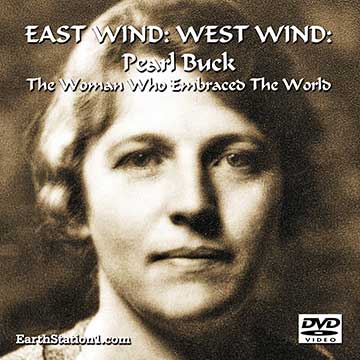
June 26, 1892: #BOTD: #HBD! Pearl Buck,
also known by her Chinese name Sai Zhenzhu, American novelist,
essayist, short story writer, Nobel Prize laureate (d. March 6,
1973) is #born Comfort Sydenstricker in Hillsboro, West Virginia.
The daughter of missionaries, Pearl Comfort Sydenstricker Buck
spent most of her life before 1934 in Zhenjiang, China. Pearl S.
Buck became a noted authority on China and wrote books which
revealed the mysterious Chinese culture to Western readers. Her
novel The Good Earth was the best-selling fiction book in the
United States in 1931 and 1932 and won the Pulitzer Prize in 1932.
In 1938, she was awarded the Nobel Prize in Literature "for
her rich and truly epic descriptions of peasant life in China and
for her biographical masterpieces". She was the first
American woman to win the Nobel Prize for Literature. After
returning to the United States in 1935, she continued writing
prolifically, became a prominent advocate of the rights of women
and minority groups, and wrote widely on Chinese and Asian
cultures, becoming particularly well known for her efforts on
behalf of Asian and mixed-race adoption. Pearl Buck died of lung
cancer in Danby, Vermont, aged 80. After her death, Pearl S.
Buck's children contested the will and accused Theodore Harris, to
whose foundation, Creativity Inc., Buck signed over her foreign
royalties and her personal possessions to, of exerting "undue
influence" on Buck during her final few years. Harris failed
to appear at the trial, and the court ruled in the family's favor.
She is interred in Green Hills Farm in Perkasie, Pennsylvania. She
designed her own tombstone; her name is not inscribed in English
on it, instead the grave marker is inscribed with Chinese
characters representing her maiden name, Pearl Sydenstricker. On
Sale @ 15% Off Discount Till Midnight PT!
https://store.earthstation1.com/east-wind-west-wind-pearl-buck-dvd-mp4-video-download-usb-flash-driv4.html
Today's
EarthStation1.com 15% Off Commemorative Memorial Title: War Props:
The Junkers Ju 87 Stuka Dive Bomber DVD, MP4, USB Drive
Today, June 26, 2026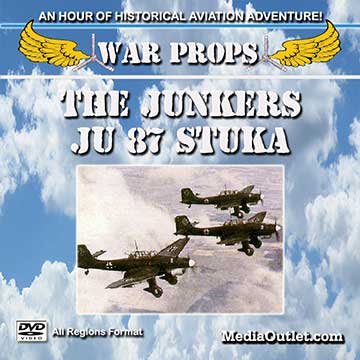
June 26, 1894: #BOTD: Hermann Pohlmann,
German aerospace engineer and principal designer of the Junkers Ju
87 Stuka dive bomber (d. July 7, 1991) is #born in Germany. He
later became the Deputy Chief Designer at the aircraft
manufacturer Blohm & Voss. After the war, when the Hamburger
Flugzeugbau (HFB) was recreated in 1956, he was appointed Chief
Designer and led the team which designed the business jet HFB 320
Hansa Jet. He died aged 97. Obtaining further details about him,
such as his birthplace, death place or anything further than
mentioned in this listing, is tellingly absent online. The Junkers
Ju 87 or Stuka (from Sturzkampfflugzeug, "Dive Bomber")
was a German dive bomber and ground-attack aircraft. Designed by
Hermann Pohlmann, it first flew in 1935. The Ju 87 made its combat
debut in 1937 with the Luftwaffe's Condor Legion during the
Spanish Civil War of 1936-1939 and served in Axis forces in World
War II (1939-1945). The aircraft is easily recognisable by its
inverted gull wings and fixed spatted undercarriage. Upon the
leading edges of its faired main gear legs were mounted ram-air
sirens known as Jericho trumpets [de], which became a propaganda
symbol of German air power and of the so-called Blitzkrieg
victories of 1939-1942, as well as providing Stuka pilots with
audible feedback as to speed. The Stuka's design included several
innovations, including automatic pull-up dive brakes under both
wings to ensure that the aircraft recovered from its attack dive
even if the pilot blacked out from the high g-forces. The Ju 87
operated with considerable success in close air support and
anti-shipping roles at the outbreak of World War II. It led air
assaults in the Invasion Of Poland in September 1939. Stukas
proved critical to the rapid conquest of Norway, the Netherlands,
Belgium and France in 1940. Though sturdy, accurate, and very
effective against ground targets, the Stuka was, like many other
dive bombers of the period, vulnerable to fighter aircraft. During
the Battle of Britain of 1940-1941, its lack of manoeuvrability,
speed and defensive armament meant that it required a heavy
fighter escort to operate effectively. After the Battle of
Britain, the Luftwaffe deployed Stuka units in the Balkans
Campaign, the African and the Mediterranean theatres and in the
early stages of the Eastern Front war, where it was used for
general ground support, as an effective specialised anti-tank
aircraft and in an anti-shipping role. Once the Luftwaffe lost air
superiority, the Stuka became an easy target for enemy
fighter-aircraft. It was produced until 1944 for lack of a better
replacement. By 1945 ground-attack versions of the Focke-Wulf Fw
190 had largely replaced the Ju 87, but it remained in service
until the end of the war in 1945. Germany built an estimated 6,000
Ju 87s of all versions between 1936 and August 1944. Oberst
Hans-Ulrich Rudel became the most successful Stuka pilot and the
most highly decorated German serviceman of the Second World War.
On Sale @ 15% Off Discount Till Midnight PT!
https://store.earthstation1.com/war-props-the-junkers-ju-87-stuka-dvd-mp4-874.html
Today's
EarthStation1.com 15% Off Commemorative Memorial Title: That War
In Korea 1964 TV Feature Film Documentary DVD, Download, USB
Today, June 26, 2026
June 26, 1898: #BOTD: #HBD! Chesty
Puller, United States Marine Corps general, the most decorated
Marine in American history (d. October 11, 1971) is #born Lewis
Burwell Puller in West Point, Virginia. Beginning his career
fighting guerillas in Haiti and Nicaragua as part of the Banana
Wars, he later served with distinction in World War II and the
Korean War as a senior officer. By the time of his retirement in
1955, he had reached the rank of lieutenant general. He was
awarded five Navy Crosses and one Distinguished Service Cross.
With six crosses, Puller is second behind Eddie Rickenbacker for
citations of the nation's second-highest military award for valor.
Puller retired from the Marine Corps in 1955, after 37 years of
service. He lived in Virginia and died in a Hampton, Virginia
nursing home following a long series of strokes, aged 73. He is
buried at Christ Church Cemetery next to his wife. On Sale @ 15%
Off Discount Till Midnight PT!
https://store.earthstation1.com/that-war-in-korea-tv-documentary-feature-film-dvd.html
Today's
EarthStation1.com 15% Off Commemorative Memorial Title: Wings Over
The World: Aviation History Series + Bonus MP4 Or DVD Set
Today, June 26, 2026
June 26, 1898: #BOTD: #HBD! Willy
Messerschmitt, German engineer, aircraft designer, manufacturer
and businessman (d. September 15, 1978) is #born Wilhelm Emil
Messerschmitt in Frankfurt am Main, German Empire. His single most
important design was the Messerschmitt Bf 109, designed in 1934
with the collaboration of Walter Rethel. The Bf 109 became the
most important fighter in the Luftwaffe as Germany rearmed prior
to World War II. To this day, it remains one of the most-produced
warplanes in history, with some 34,000 built, with only the Soviet
Union Ilyushin Il-2 surpassing it at 36,000. Another Messerschmitt
aircraft, first called "Bf 109R", purpose-built for
record setting, but later redesignated Messerschmitt Me 209, broke
the absolute world airspeed record and held the world speed record
for propeller-driven aircraft until 1969. His firm also produced
the first jet-powered fighter to enter service - the Messerschmitt
Me 262, although Messerschmitt himself did not design it. Willy
Messerschmitt died in a Munich hospital in undisclosed
circumstances, aged 80. He is buried at the Hauptfriedhof Bamberg
in Bamberg, Bavaria, Germany. On Sale @ 15% Off Discount Till
Midnight PT!
https://store.earthstation1.com/wings-over-the-world-7-dvd-set-entire-aviation-tv-serie7.html
Today's
EarthStation1.com 15% Off Commemorative Memorial Title: The Wing
Will Fly: Flying Wing History Documentary DVD, Download, USB
Today, June 26, 2026
June 26, 1901: #BOTD: Stuart Symington,
American lieutenant, businessman, Democratic politician from
Missouri and Freemason, 1st United States Secretary Of The Air
Force from 1947 to 1950, United States Senator from Missouri from
1953 to 1976, infamous for his blind and vindictive cancelling of
the contract for Jack Northrop's landmark and ultimately vidicated
YB-49 Flying Wing bomber (the Northrop B-2 Spirit Stealth Bomber
is its decendant) and for destroying all those Flying Wings
already built (d. December 14, 1988) is #born William Stuart
Symington III in Amherst, Massachusetts, Symington worked as an
executive in his uncle's iron products company and for other
companies before becoming president of Emerson Electric. He
resigned from Emerson in 1945 to take various positions in the
administration of President Harry S. Truman, becoming the first
Secretary of the Air Force in 1947. He was elected to the Senate
in 1952, defeating incumbent Republican Senator James P. Kem. He
joined the Senate Armed Services Committee and the Senate Foreign
Relations Committee, and emerged as a prominent critic of
McCarthyism. Symington sought the Democratic nomination in the
1960 presidential election with the backing of former President
Truman, but the nomination went to John F. Kennedy. After the
Kansas City Athletics moved to Oakland, Symington threatened to
revoke Major League Baseball's antitrust exemption, which in turn
encouraged the formation of the Kansas City Royals. Symington
declined to seek re-election in 1976 and was succeeded by John
Danforth. During his tenure as Secretary Of The Air Force, there
was a major debate and investigation into production of the
Convair B-36 Peacemaker, which was the last piston-powered bomber
at the beginning of the Jet Age. During his tenure, Symington had
a meeting with John K. Northrop on the contract for the YB-49
Flying Wing bomber, which was well underway with seven examples
manufactured. During this meeting, Symington threatened Northrop
that if they refused to enter into a corporate merger with Convair
(the company building the rival B-36 Peacemaker bomber) that
Northrop would be, "Goddamn sorry if you don't!". This
threat, later reported by Northrop, was eventually carried though
when Symington cancelled the Flying Wing programme and ordered all
existing aircraft destroyed. Major accomplishments during
Symington's term as Secretary included the Berlin Airlift and
championing the United States Air Force Academy. Symington
resigned in 1950 to protest lack of funding for the Air Force
after the USSR detonated its first nuclear weapon. He remained in
the administration as the Chairman of the National Security
Resources Board (1950-1951) and the Chairman of the Reconstruction
Finance Corporation Administrator (1951-1952). He was featured on
the cover of Time magazine's January 19, 1948 issue. Symington was
an active member of the Grand Lodge of Missouri Ancient Free and
Accepted Masons. Symington retired in 1978 to his home in New
Canaan, Connecticut, where he died on December 14, 1988. He is
buried in a crypt in Washington National Cathedral. In Jeff
Greenfield's alternate history book If Kennedy Lived, Symington is
featured as surviving-President John F. Kennedy's running mate in
the 1964 presidential election, after Vice President Lyndon
Johnson was forced to leave due to Johnson's political advisor
Robert Gene Baker's bribery and sexual favor scandal in exchange
for Congressional votes and government contracts, the
investigation into which was dropped after President Kennedy's
assassination and Johnson's ascension to the presidency. On Sale @
15% Off Discount Till Midnight PT!
https://store.earthstation1.com/the-wing-will-fly-flying-wing-history-documentary-dvd-download-usb.html
Today's
EarthStation1.com 15% Off Commemorative Memorial Title: John
Hammond: Bessie Smith to Bruce Springsteen DVD, MP4, Flash Drive
Today, June 26, 2026
June 26, 1903: #BOTD: #HBD! Big Bill
Broonzy, African American blues singer, songwriter and guitarist
(d. August 14, 1958) is #born Lee Conley Bradley, one of the 17
children of Frank Broonzy (Bradley) and Mittie Belcher. The date
and place of his birth are disputed. Broonzy claimed to have been
born in Scott, Mississippi, but a body of emerging research
compiled by the blues historian Robert Reisman suggests that he
was born in Jefferson County, Arkansas. Broonzy claimed he was
born in 1893, and many sources report that year, but family
records discovered after his death suggested that the year was
1903. Big Bill Broonzy's career began in the 1920s, when he played
country blues to mostly African American audiences. Through the
1930s and 1940s he successfully navigated a transition in style to
a more urban blues sound popular with working-class African
American audiences. In the 1950s a return to his traditional
folk-blues roots made him one of the leading figures of the
emerging American folk music revival and an international star.
His long and varied career marks him as one of the key figures in
the development of blues music in the 20th century. Broonzy
copyrighted more than 300 songs during his lifetime, including
both adaptations of traditional folk songs and original blues
songs. As a blues composer, he was unique in writing songs that
reflected his rural-to-urban experiences. On August 14, 1958, Big
Bill Broonzy died of throat cancer (though even as with his birth,
sources vary on the precise date), and is buried in Lincoln
Cemetery, in Blue Island, Illinois. On Sale @ 15% Off Discount
Till Midnight PT!
https://store.earthstation1.com/john-hammond-from-bessie-smith-to-bruce-springsteen-dvd.html
Today's
EarthStation1.com 15% Off Commemorative Memorial Title: Suspense!
Old Time Radio Series DVD, MP3 Download, USB Flash Drive
Today, June 26, 2026
June 26, 1904: #BOTD: #HBD! Peter Lorre,
Hungarian-American stage, screen and radio actor (d. March 23,
1964) is #born Laszlo Lowenstein into a Jewish family in the
Hungarian town of Rozsahegy in Lipto County (German: Rosenberg;
Slovak: Ruzomberok, now in Slovakia). Lorre began his stage career
in Vienna before moving to Germany where he worked first on the
stage, then in film in Berlin in the late 1920s and early 1930s.
Lorre caused an international sensation in the German film M
(1931), directed by Fritz Lang, in which he portrayed a serial
killer who preys on little girls. Beingf Jewish descent, Lorre
left Germany when Adolf Hitler came to power. His second
English-language film, following the multiple-language version of
M (1931), was Alfred Hitchcock's The Man Who Knew Too Much (1934)
made in Great Britain. Eventually settling in Hollywood, he later
became a featured player in many Hollywood crime and mystery
films. In his initial American films, Mad Love and Crime and
Punishment (both 1935), he continued to play murderers, but he was
then cast playing Mr. Moto, the Japanese detective, in a B-picture
series. From 1941 to 1946, he mainly worked for Warner Bros. His
first film at Warner was The Maltese Falcon (1941), the first of
many films in which he appeared alongside actors Humphrey Bogart
and Sydney Greenstreet. This was followed by Casablanca (1942),
the second of the nine films in which Lorre and Greenstreet
appeared together. Lorre's other films include Frank Capra's
Arsenic and Old Lace (1944) and Disney's 20,000 Leagues Under the
Sea (1954). Frequently typecast as a sinister foreigner, his later
career was erratic. Lorre was the first actor to play a James Bond
villain as Le Chiffre in a TV version of Casino Royale (1954).
Some of his last roles were in horror films directed by Roger
Corman. On March 23, 1964, Peter Lorre died in Los Angeles from a
stroke. His body was cremated and his ashes were interred at the
Hollywood Forever Cemetery in Hollywood. Vincent Price read the
eulogy at his funeral. On Sale @ 15% Off Discount Till Midnight
PT!
https://store.earthstation1.com/suspense-mp3-dvd-complete-old-time-radio-serie3.html
Today's
EarthStation1.com 15% Off Commemorative Memorial Title: CIA The
Secret Files The Central Intelligence Agency TV Series MP4 DVD
Today, June 26, 2026
June 26, 1908: #BOTD: Salvador Allende,
Chilean physician and socialist politician who served as the 29th
president of Chile from November 3, 1970 (d. September 11, 1973)
is #born Salvador Guillermo Allende Gossens in Santiago, Chile. He
won the 1970 Chilean Presidential Election on September 4, 1970,
becoming the first Marxist to be elected president of a Latin
American liberal democracy, and the first Marxist to win the
presidency of a Latin American country through open elections.
Allende's involvement in Chilean politics spanned a period of
nearly forty years, having covered the posts of senator, deputy
and cabinet minister. As a life-long committed member of the
Socialist Party of Chile, whose foundation he had actively
contributed to, he unsuccessfully ran for the national presidency
in the 1952, 1958, and 1964 elections. In 1970, he won the
presidency as the candidate of the Popular Unity coalition, in a
close three-way race. He was elected in a run-off by Congress, as
no candidate had gained a majority. As president, Allende sought
to nationalize major industries, expand education and improve the
living standards of the working class. He clashed with the
right-wing parties that controlled Congress and with the
judiciary. Salvador Allende died during The 1973 Chilean Coup
D'Etat, when The Government Junta Of Chile, a military junta
headed by Chilean General Augusto Pinochet and supported by the
United States Central Intelligence Agency (CIA), toppled the
democratically president and his government in a coup d'etat,
establishing The Military Dictatorship Of Chile (1973-1990),
ending more than four decades of uninterrupted democratic
governance and ushering in The Military Dictatorship Of Chile
(1973-1990). As troops surrounded La Moneda Palace, he gave his
last speech vowing not to resign. Later that day, Allende
committed suicide though there has been some controversy about the
cause of his death with some believing it to be an assassination.
He is buried at The Cementerio General De Santiago in Santiago,
Chile. Following Allende's death, General Pinochet refused to
return authority to a civilian government. The junta then
dissolved the Congress of Chile, suspended the Constitution, and
began a program of persecuting alleged dissidents, in which at
least 3,095 civilians disappeared or were killed. Pinochet
exercised dictatorial power in Chile until ousted in a referendum
in 1988. Despite this ouster, Pinochet stayed in power as the head
of a ruling military junta until The Chilean Transition To
Democracy in 1990. On Sale @ 15% Off Discount Till Midnight PT!
https://store.earthstation1.com/cia-the-secret-files-the-central-intelligence-agency-tv-series-mp4-dv4.html
Today's
EarthStation1.com 15% Off Commemorative Memorial Title: The
Gambino Crime Family: American Mafia Dons MP4 Video Download DVD
Today, June 26, 2026
June 26, 1915: #BOTD: Paul Castellano, American crime boss who succeeded Carlo Gambino as head of the Gambino crime family, variously known as "Big Paulie", "PC", "The Pope", "The Chicken Man" and "The Beak" (d. December 16, 1985) is #born Constantino Paul Castellano in Bensonhurst, Brooklyn in 1915, to Italian immigrants Giuseppe and Concetta Castellano (nee Cassata). In the 1940s, Castellano became a member of the Mangano family. He became a capo under boss Vince Mangano's successor, Albert Anastasia. In 1957, after Anastasia's homicide and Carlo Gambino's elevation to boss, Castellano attended the abortive Apalachin meeting in Apalachin, New York. When New York State Police raided the meeting, Castellano was one of 61 high-ranking mobsters arrested. Refusing to answer grand jury questions about the meeting, Castellano spent a year in prison on contempt charges. On January 13, 1960, Castellano was sentenced to five years in prison for conspiracy to withhold information. However, in November 1960, Castellano's conviction was reversed by an Appeals Court. Castellano identified more as a businessman than a hoodlum; he took over non-legitimate businesses and converted them to legitimate enterprises. But Castellano's businesses, and those of his sons, thrived from their mob ties. In his early years, Castellano used his butcher's training to launch Dial Poultry, a poultry distribution business that once supplied 300 butchers in New York City. Dial's customers also included supermarket chains Key Food and Waldbaum's. Castellano used intimidation tactics to force his customers to buy Dial's products. As Castellano became more powerful in the Gambino family, he started to make large amounts of money from construction concrete. Castellano's son Philip was the president of Scara-Mix Concrete Corporation, which exercised a near monopoly on Staten Island on construction concrete. Castellano also handled the Gambino interests in the "Concrete Club," a club of contractors selected by The Commission to handle contracts between 2M and 15M USD. In return, the contractors gave a two-percent kickback of the contract value to The Commission. Castellano also supervised Gambino control of Teamsters Union Local Chapter 282, which provided workers to pour concrete at all major building projects in New York and Long Island. In 1975, Castellano allegedly had Vito Borelli, the boyfriend of his daughter Constance, murdered because he heard Borelli had compared him to Frank Perdue, the owner and commercial spokesman for Perdue Farms. In 2004, court documents revealed that Joseph Massino, a government witness and former Bonanno crime family boss, admitted murdering Borelli as a favor to Castellano. On October 15, 1976, Carlo Gambino died at home of natural causes. Against expectations, he had appointed Castellano to succeed him over his underboss Aniello "Neil" Dellacroce. Gambino appeared to believe that his crime family would benefit from Castellano's focus on white collar businesses. Dellacroce, at the time, was imprisoned for tax evasion and was unable to contest Castellano's succession. Castellano's succession was confirmed at a meeting on November 24, with Dellacroce present. Castellano arranged for Dellacroce to remain as underboss while directly running traditional Cosa Nostra activities such as extortion, robbery, and loansharking. While Dellacroce accepted Castellano's succession, the deal effectively split the Gambino family into two rival factions. John Gotti, Dellacroce's former protege, rapidly became dissatisfied with Castellano's leadership, regarding the new boss as being too isolated and greedy. Like other members of the family, Gotti also personally disliked Castellano. The boss lacked street credibility, and those who had paid their dues running street level jobs did not respect him. Dellacroce died of cancer on December 2, 1985, starting a chain of events that led to Castellano's murder two weeks later. On Monday, December 16, 1985, Bilotti drove Castellano to the prearranged early evening meeting at Sparks Steak House in Midtown Manhattan, on East 46th Street near Third Avenue. A hit team (consisting of Salvatore Scala, Edward Lino and John Carneglia) waited near the restaurant entrance; positioned down the street were backup shooters Dominick Pizzonia, Angelo Ruggiero, and Tony Rampino. Gotti and Gravano observed the scene from a car across the street. As Castellano was exiting the car at the front of the restaurant at around 5:26 pm, the gunmen ran up and shot him several times in an unsanctioned hit. Allegedly, John Carneglia was the gunman who shot Castellano in the head. Bilotti was shot as he exited from the driver's door. Before leaving the murder scene, Gotti drove over to view the bodies. Castellano was buried in the Moravian Cemetery in the New Dorp section of Staten Island. The Archdiocese of New York refused to grant Castellano a Catholic funeral, citing his notorious life and death. Two weeks after Castellano's murder, a meeting of capos in a Manhattan basement elected Gotti, age 45, as the new Gambino boss. The Castellano murder enraged Vincent Gigante, boss of the Genovese crime family, because Gotti never received permission for the act from the Commission. Gigante solicited the help of Lucchese crime family boss Anthony Corallo to kill Gotti. On April 13, 1986, a car bomb meant for Gotti exploded outside a Bensonhurst social club, but the only casualty was Frank DeCicco. Gotti was arrested by the FBI in late 1990 on racketeering charges and denied bail 10 days later. On April 2, 1992, with the help of Gravano becoming a government witness, Gotti was convicted of numerous racketeering charges, including the 1985 Castellano murder. On June 23, Gotti was sentenced to life in federal prison, where he died of throat cancer in 2002. No one else was ever charged in the Castellano murder. On Sale @ 15% Off Discount Till Midnight PT! https://store.earthstation1.com/gacrfaammado.html
Today's
EarthStation1.com 15% Off Commemorative Memorial Title: The
Gallant Breed: US Marine Chronicles + 2 Bonuses MP4 Download DVD
Today, June 26, 2026
June 26, 1918: The European Civil War:
World War I: The First European War (The European Theater Of World
War I): The Western Front Of World War I: The German Spring
Offensive (Kaiserschlacht (German: "Kaiser's Battle"),
(The Ludendorff Offensive): The Battle Of Belleau Wood: -- Allied
Forces under John J. Pershing and James Harbord defeat Imperial
German Forces under Wilhelm, German Crown Prince in The Battle Of
Belleau Wood. On June 1, 1918, The Battle Of Belleau Wood occurred
during the German Spring Offensive in World War I, near the Marne
River in France. The battle was fought between the U.S. 2nd (under
the command of Major General Omar Bundy) and 3rd Divisions along
with French and British forces against an assortment of German
units including elements from the 237th, 10th, 197th, 87th, and
28th Divisions. The battle has become a key component of the lore
of the United States Marine Corps. On Sale @ 15% Off Discount Till
Midnight PT!
https://store.earthstation1.com/the-gallant-breed-dvd-set-3-part-us-marine-history-2-dis32.html
Today's
EarthStation1.com 15% Off Commemorative Memorial Title: The Siege
Of Vicksburg American Civil War DVD MP4 Download USB Drive
Today, June 26, 2026
June 26, 1923: #BOTD: #HBD! Ed Bearss
(rhymes with "parse"), author, historian of the American
Civil War, tour guide, and United States Marine Corps veteran of
the battles of Guadalcanal And New Britain in the Asia-Pacific
Theater of World War II (d. September 15, 2020) is #born Edwin
Cole Bearss in Billings, Montana. He was raised working on his
grandfather's ranch near Hardin, Montana, and attended a one-room
school in Sarpy, Montana. Bearss was accepted to St. John's
Military Academy in Delafield, Wisconsin in 1937, and graduated
from Hardin High School in 1941. Bearss enlisted in the United
States Marine Corps in 1941. During World War II, he served in the
3rd Marine Raider Battalion; he fought in the Guadalcanal and New
Britain campaigns with the 1st Marine Division. In 1943, Bearss
caught malaria in the South Pacific, and was sent to New Zealand
to recover. On January 2, 1944, with the 3rd Battalion, 7th
Marines at the Battle of Cape Gloucester, Bearss was hit by
Imperial Japanese Army machine-gun fire that broke both of his
arms and injured his heel and buttocks; after spending the next 26
months in hospital, he left the Marines in March 1946 with the
rank of corporal. Bearss earned two college degrees courtesy of
the G.I. Bill: his Bachelor of Science in Foreign Service from
Georgetown University in 1949, and his Master of Arts from Indiana
University in 1955, the latter with a thesis on Patrick Cleburne.
In February 2005, Bearss was awarded an honorary degree from
Lincoln College in Lincoln, Illinois; Gettysburg College did the
same in 2010. In 1955, Bearss began working for the National Park
Service (NPS) in Vicksburg, Mississippi. He prepared historical
studies for the Interior Department agency and founded the
Mississippi Civil War Roundtable. For the NPS, he found the Civil
War-era cannon Widow Blakely (also Whistling Dick) which had been
used in the Vicksburg campaign, as well as the wreck of USS Cairo.
He also found two lost forts in Grand Gulf, Mississippi, and was
party to the establishment of Grand Gulf as a state military
monument. Bearss was the NPS' chief historian from 1981-1994, and
"special assistant to the director for military sites"
until 1995; in 1991, he was made the NPS' chief historian of
military sites. Bearss retired from the NPS on September 30, 1995,
though he continued to lead tours of ACW battlefields for the
Smithsonian Institution, the National Geographic Society, the
National Trust for Historic Preservation, and Civil War
Roundtables. The NPS awarded him the unique title of National Park
Service Historian Emeritus. Frances and Roger G. Kennedy endowed
the Bearss Fellowship Award in honor of the former
chief-historian; it "supports NPS employees' graduate-level
studies in American History or American Studies and is
administered in partnership with the National Park Foundation."
On July 30, 1958, Bearss married author and teacher Margie Riddle
of Mississippi (born 1925 or 1926), and the two had three
children: Sara in 1960, Edwin Jr. in 1962, and Mary in 1965. The
Company of Military Historians made Bearss a fellow of that group
in 1964, and he received the Nevins-Freeman Award in 1980 for his
work on American Civil War (ACW) history. Three years later, the
Department of the Interior awarded him the Distinguished Service
Award, and it was followed by a commendation from the United
States Secretary of the Army in 1985. On 23 April 2015, US
Representative Gerry Connolly (VA) introduced bill H.R.2059 to
award Bearss the Congressional Gold Medal "in recognition of
his contributions to preservation of American Civil War history
and continued efforts to bring our nation's history alive for new
generations through his interpretive storytelling." In June
2018, the American Battlefield Trust awarded Bearss its first
Lifetime Achievement Award "for his many decades dedicated to
researching and relating the nation's past to millions of people,
as well as his advocacy for battlefield preservation." Ed
Bearss died shortly after a heart attack at an assisted-living
facility in Richland, Mississippi, aged 97. He is buried at Bethel
Cemetery, Brandon, Mississippi. On Sale @ 15% Off Discount Till
Midnight PT!
https://store.earthstation1.com/the-siege-of-vicksburg-american-civil-war-dvd-mp4-download-usb-driv4.html
Today's
EarthStation1.com 15% Off Commemorative Memorial Title: Franklin
D. Roosevelt Documentaries DVD, Video Download, USB Drive
Today, June 26, 2026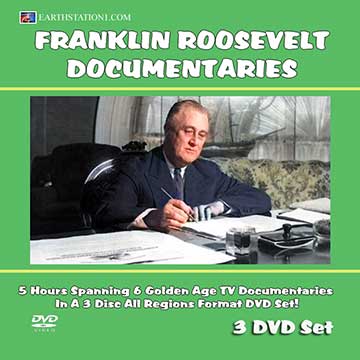
June 26, 1934: The Interwar Period (The
Interbellum, Between The Wars): The Great Depression: The Great
Depression In The United States: The New Deal: The First New Deal
(1933-1934): The History Of Banking In The United States: Credit
Unions Of The United States: United States Federal Banking
Legislation: The Federal Credit Union Act: -- United States
President Franklin D. Roosevelt signs the Federal Credit Union
Act, which establishes credit unions. The purpose of the law was
to make credit available and promote thrift through a national
system of nonprofit, cooperative credit unions. This Act
established the federal credit union system and created the Bureau
of Federal Credit Unions, the predecessor to the National Credit
Union Administration, to charter and oversee federal credit
unions. The general provisions in the Federal Act were based on
the Massachusetts Credit Union Act of 1909, and became the basis
of many other state credit union laws. Under the provisions of the
Federal Credit Union Act, a credit union may be chartered under
either federal or state law, a system known as dual chartering,
which is still in existence today. Credit union law in the U.S.
built on earlier legislation such as that developed by Franz
Hermann Schulze-Delitzsch in Germany and Alphonse Desjardins in
Canada. Among the individuals responsible for formulating credit
union legislation in the United States were Edward Filene, Pierre
Jay and Roy Bergengren. The Act is amended periodically to evolve
and remain a modern credit union law. This contemporary law,
coupled with the NCUA Board's commitment to reduce regulatory
burden, enables federal credit unions to offer a variety of
services to meet the financial needs of their members. For
example, in addition to basic passbook share, many federal credit
unions offer share drafts, share certificates, and credit cards.
Federal credit unions organized and operated in accordance with
the Federal Credit Union Act are considered entities of the United
States government and are tax-exempt under savings accounts. On
Sale @ 15% Off Discount Till Midnight PT!
https://store.earthstation1.com/franklin-roosevelt-documentaries-dual-layer-dvd.html
Today's
EarthStation1.com 15% Off Commemorative Memorial Title: Eyes On
The Prize II: America At The Racial Crossroads DVD MP4 USB
Today, June 26, 2026
June 26, 1934: Civil Rights Movements:
The American Civil Rights Movement (1896-1954) (The Jim Crow Era):
W. E. B. Du Bois' A Negro Nation Within A Nation Speech: -- In one
of the most imporant and pivotal moments in the history of the
African American Civil Rights Movment, W. E. B. Du Bois, African
American civil rights activist, one of the founders of the
National Association for the Advancement of Colored People (NAACP)
in 1909, until then a staunch integrationist, resigns from the
NAACP in a blistering speech in New York entitled "A Negro
Nation Within A Nation". In it, he advanced the argument that
since integration would not happen in the nation any time soon,
African Americans had to take steps to develop their own economic
and political resources independent of white help and support,
proclaiming that if white Americans would never tolerate
desegregation, then African Americans should create a segregated
society on their own terms. Although slavery in the United States
officially ended in 1865, many African Americans' lives did not
improve as much as they had hoped. The majority of African
Americans continued to work as farm laborers, in many cases for
the same white Americans who had once owned them. After the
federal government ended Reconstruction in 1877, former slave
states enacted Jim Crow laws (e.g., poll taxes, literacy tests) to
restrict African Americans' voting rights. Throughout the South
and Midwest, the Ku Klux Klan (KKK) inspired fear by burning homes
and lynching African Americans. Throughout the 1890s-1900s,
African American civil rights leaders attempted to make progress
where they could. In 1895, Booker T. Washington gave the Atlanta
Compromise speech, which proposed that African Americans would
accept segregation as long as they were allowed economic
opportunities. However, African American leaders soon realized
that segregation was causing more harm than what good economic
opportunities could provide. One such harm was in education;
states and communities often underfunded African American public
schools. World War I (1914-1918) provided new economic
opportunities for African Americans, and starting in 1916, they
began leaving the South in record numbers to take manufacturing
jobs in the North, Midwest, and West. This exodus was known as the
Great Migration. Prosperity was brief, however. When the war
ended, white soldiers returning from Europe took back the
industrial jobs that African Americans had held. Also,
agricultural prices plummeted, hurting African American
sharecroppers throughout the country. With the beginning of the
Great Depression in 1929, all Americans suffered. But African
Americans, already denied economic opportunities for decades, felt
the economic pain more than white Americans. W.E.B. Du Bois was
one of the most influential African American civil rights leaders
in the late 19th and early 20th centuries. Born on February 23rd,
1868, in Massachusetts to a Franco-Haitian father and an African
American mother, he benefited from something many African
Americans could not attain in the late 19th century-an education.
After becoming the first member of his family to graduate from
high school, Du Bois attended Fisk University in Nashville,
Tennessee. There, he experienced Southern racism for the first
time, which prompted his political and social awakening. Du Bois
eventually transferred to Harvard University, where he earned a
history degree in 1890. Over the next decade, Du Bois became an
influential civil rights activist, traveling the world to garner
support for his cause. In 1906, he founded the Niagara Movement,
which called for both legal and economic equality for African
Americans. This movement was a response to African American civil
rights leaders, such as Booker T. Washington, who asked African
Americans to accommodate segregation and voter disenfranchisement.
Three years later, Du Bois helped found the National Association
for the Advancement of Colored People (NAACP). The NAACP's
original mission was to advocate for the ideas that the Niagara
Movement had set forth. Du Bois worked tirelessly over the
following decades to advance racial equality. However, by the time
of the Great Depression, segregation was still the law of the
land. In 1934, he resigned from the NAACP (for over 20 years he
had been the editor of the organization's magazine, The Crisis)
with his speech "A Negro Nation Within A Nation". The
men and women listening to Du Bois' speech, NAACP members, likely
knew the significance of the three years referenced in the
speech's first sentence. 1830, 1861, and 1867 all involved
historical events that advanced either the abolitionist movement
or African American civil rights. Du Bois claims that the 1930s
held a more "critical situation" than these other
moments had. He uses the first part of his speech to show his
reasoning. Du Bois recounts the African American struggle for
civil rights and economic equality. The Progressive Movement,
which brought votes for women and labor unions, was not racially
inclusive, and the white Americans who led these causes in many
cases ignored the plight of African Americans. Du Bois laments how
technological advances have pushed African Americans out of "life
supporting" agricultural work. At the same time, the best
paying industrial jobs shut out African Americans either due to
discriminatory laws or personal prejudice. He also reminds
listeners that, yes, there was a moment in recent history-World
War I-that provided African Americans some economic gains. But
even then, white union members would not accept African Americans
in their ranks. Thus, African Americans took only the
lowest-paying jobs. This information provides context to one of Du
Bois' first major points: since emancipation, African Americans
have struggled tremendously. Now, in the 1930s, they struggle even
more due to the Great Depression. Yes, the Great Depression has
affected all Americans, but African Americans have felt the brunt
of it more than their white peers. Du Bois claims that most white
Americans "do not like" African Americans. He means more
than racial hatred. He states that most white Americans "scarcely
can be expected to take seriously the affairs of strangers or
people whom they partly fear and partly despise". This
statement implies that general apathy, combined with long-standing
fear and racism, has led to a white culture that generally ignores
African Americans' plight. Du Bois then addresses African American
leaders who would say that white Americans' inability to address
racism is due to ignorance rather than apathy. Du Bois reminds
listeners that they have been working for decades to bring racial
injustice to white Americans' attention. "Americans know the
facts ... and yet they remain for the most part indifferent and
unmoved." At this point, the speech offers some hope. He
cites multiple facts and figures that African Americans' earning
power, education level, and manpower all present tremendous
economic opportunities. And even though African Americans face
obstacles to voting in the South, African Americans still cast
millions of votes in each election. He uses these positive facts
and figures as a bridge to his call to action. Du Bois describes
his vision of "an economic nation with a nation" where
African Americans can rely on one another without entirely
separating themselves from the rest of the country. He supports
his argument by alluding to the other ethnic groups that have
already done the same thing throughout American history. Du Bois
knows that his listeners might have objections to his plan, so he
denounces how "our educated young leaders" have simply
ignored racism in the hope that white people will eventually
change their minds and accept African Americans. This argument
calls back to his earlier statements on white racism and apathy.
Finally, if educated and influential African Americans do not act
in their race's interests, they will be responsible when millions
of African Americans "sink, suffer, and die" at the
hands of segregation and economic inopportunity. Du Bois then
addresses another counter-argument: if African American leaders
started "lifting the mass of people"-helping the poor
men and women of their own race-they would "submerge,"
losing what little social and political equality they gained in
white American's eyes. Du Bois calls this argument "futile,"
and once again reminds his audience that if they do not act, most
African Americans are "doomed". Finally, Du Bois
encourages his listeners by describing how African Americans have
already begun the process he describes by voluntarily segregating
their churches and businesses. These "self-supporting
economic units" have already done much to uplift African
Americans. Du Bois believes that when the "most vigorous and
best educated negroes" lend their expertise to the cause of
"voluntary and increased segregation," African Americans
will find the opportunity and equality they have for so long been
denied by white Americans. Considering that the Civil Rights
Movement of the 1950s-60s rejected Du Bois' proposal to create a
Negro nation within a nation, should we view his ideas as wrong or
regressive? Or were his ideas reasonable when viewed in the
context of the time in which he lived? "A Negro Nation Within
a Nation" represents a moment when one of America's greatest
civil rights leaders shared his realization that what African
Americans were doing to advance social, political, and economic
equality wasn't working. His criticisms about white and African
Americans accurately describe the state of race relations during
the Great Depression. Voluntary economic segregation, at least to
Du Bois, was the only answer, and one that he believed was
appropriate considering the economic pain African Americans were
feeling in the 1930s. "A Negro Nation Within a Nation"
offers modern readers a glimpse of a time when race relations in
the United States was at one of its lowest points. In nearly 70
years since emancipation, African Americans had not experienced
the opportunities that freedom should have provided them. In this
regard, "A Negro Nation Within a Nation" was not so much
an extreme idea, but the last option-at least in Du Bois'
opinion-African Americans had to gain what they had wanted for so
long. Finally, although Du Bois gave up on his original dream of
true racial equality, the next generation of African American
leaders did not. Just one year after his death, the Civil Rights
Act of 1964 made law many of the goals Du Bois had set out to
achieve as a young man. On Sale @ 15% Off Discount Till Midnight
PT!
https://store.earthstation1.com/eyes-on-the-prize-ii-dvd-set-4-discs-complete-2nd-seri42.html
Today's
EarthStation1.com 15% Off Commemorative Memorial Title: Choppers:
Helicopter History TV Documentary Series DVD, Download, USB
Today, June 26, 2026
June 26, 1936: Aviation: The History Of
Aviation: The History Of Civil Aviation: Maiden Flights: -- The
Focke-Wulf Fw 61, also known as the Fa 61, the first practical,
functional helicopter, makes its first flight with test pilot
Ewald Rohlfs at the controls. Professor Henrich Focke developed
the turbo shaft propulsion system used by the majority of all the
world's helicopters, and through his development of the Fw 186,
and his work on the C.19 and licence-built C.30 autogyros, came to
the conclusion that the limitations of autogyros could be
eliminated only by an aircraft capable of vertical flight, the
helicopter. He and engineer Gerd Achgelis started the design for
this helicopter in 1932. A free-flying model, built in 1934 and
propelled by a small two-stroke engine, brought the promise of
success. Today, the model can be seen in the Deutsches Museum in
Munich. The airframe was based on that of a well-tried training
aircraft, the Focke-Wulf Fw 44 Stieglitz. Using rotor technology
licensed from the Cierva Autogiro Company, a single radial engine
drove twin rotors, set on tubular steel outriggers to the left and
right of the fuselage. The counter-rotation of the two rotors
solved the problem of torque-reaction. The small horizontal-axis
propeller directly driven by the engine was purely to provide the
necessary airflow to cool the engine during low speed or hovering
flight and provided negligible forward thrust. Only two aircraft
were produced, and neither survived the Second World War. In
February 1938, the Fw 61 was demonstrated by Hanna Reitsch indoors
at the Deutschlandhalle sports stadium in Berlin, Germany. It
subsequently set several records for altitude, speed and flight
duration culminating, in June 1938, with an altitude record of
3,427 m (11,243 ft), breaking the unofficial 605 meter altitude
record of the TsAGI 1-EA single lift-rotor helicopter from the
Soviet Union set in August 1932, and a straight line flight record
of 230 km (143 mi). On Sale @ 15% Off Discount Till Midnight PT!
https://store.earthstation1.com/choppers-complete-13-part-tv-series-4-dvd-134.html
Today's
EarthStation1.com 15% Off Commemorative Memorial Title: War Props:
The Grumman F6F Hellcat MP4 Video Download DVD
Today, June 26, 2026
June 26, 1942: Aviation: The History Of
Aviation: The History Of Military Aviation: Maiden Flights: -- The
first flight of the Grumman F6F Hellcat, an American carrier-based
fighter aircraft of World War II. Designed to replace the earlier
F4F Wildcat and to counter the Japanese Mitsubishi A6M Zero, it
was the United States Navy's dominant fighter in the second half
of the Pacific War. The Hellcat competed with the faster Vought
F4U Corsair for that role and prevailed, as the Corsair had
significant issues with carrier landings. The Corsair instead was
primarily deployed to great effect in land-based use by the U.S.
Marine Corps. Powered by a 2,000 hp Pratt and Whitney R-2800
Double Wasp, the same powerplant used for both the Corsair and the
United States Army Air Forces (USAAF) Republic P-47 Thunderbolt
fighters, the F6F was an entirely new design, but it still
resembled the Wildcat in many ways. Some military observers tagged
the Hellcat as the "Wildcat's big brother". The F6F made
its combat debut in September 1943, and was best known for its
role as a rugged, well-designed carrier fighter which was able to
outperform the A6M Zero and help secure air superiority over the
Pacific theater. A total of 12,275 were built in just over two
years. Hellcats were credited with destroying a total of 5,223
enemy aircraft while in service with the U.S. Navy, U.S. Marine
Corps and the Royal Navy Fleet Air Arm. This was more than any
other Allied naval aircraft. Postwar, the Hellcat was phased out
of front line service but remained in service as late as 1954 as a
night fighter. On Sale @ 15% Off Discount Till Midnight PT!
https://store.earthstation1.com/war-props-the-grumman-f6f-hellcat-dv6.html
Today's
EarthStation1.com 15% Off Commemorative Memorial Title: US Fleet
Submarines Of The Pacific War MP4 Video Download DVD
Today, June 26, 2026
June 26, 1942: Naval History: The History
Of The United States Navy: The New United States Navy (The New
Navy, The United States Navy 1885-Present): Naval Launches:
Submarines (Subs): The USS Balao (SS/AGSS-285): -- USS Balao, the
lead ship of the United States Navy's Balao-class submarines which
were the greatest long-range submarines of World War II, has its
keel laid down on June 26, 1942 at the Portsmouth Navy Yard in
Kittery, Maine. It was launched sponsored by Mrs. Jane Aylward,
wife of Lieutenant Commander Theodore C. Aylward on October 27,
1942, and was commissioned onFebruary 4, 1943. Named for the
balao, a small schooling marine fish, USS Balao was commissioned
on February 4, 1943, and then reported to the United States
Pacific Fleet. After a six-week training period in New London,
Connecticuit., the submarine sailed for the Pacific Theater of
Operations and joined the 7th Fleet at Brisbane, Australia, on
July 10, 1943. The Balao Class Submarines were a design of United
States Navy submarine used during World War II, and with 120 boats
completed, the largest class of submarines in the United States
Navy. An improvement on the earlier Gato class, the boats had
slight internal differences. The most significant improvement was
the use of thicker, higher yield strength steel in the pressure
hull skins and frames, which increased their test depth to 400
feet (120 m). Tang actually achieved a depth of 612 ft (187 m)
during a test dive, and exceeded that test depth when taking on
water in the forward torpedo room while evading a destroyer. On
Sale @ 15% Off Discount Till Midnight PT!
https://store.earthstation1.com/us-fleet-submarines-of-the-pacific-war-mp4-video-download-dvd.html
Today's
EarthStation1.com 15% Off Commemorative Memorial Title: TV Music &
Dance Shows #5 Ready Steady Go! DVD, Download, Flash Drive
Today, June 26, 2026
June 26, 1943: #BOTD: #HBD! Georgie Fame,
English rhythm and blues and jazz singer and keyboard player is
#born Clive Powell at 1 Cotton Street, Leigh, Lancashire, England.
Fame, who had a string of 1960s hits, is still a popular
performer, often working with contemporaries such as Van Morrison
and Bill Wyman. Fame is the only British pop star to have achieved
three number one hits with his only Top 10 chart entries: "Yeh,
Yeh" in 1964, "Get Away" in 1966 and "The
Ballad of Bonnie And Clyde" in 1967. Georgie Fame was one of
a small group of British blues musicians present when Eddie
Cochran played a Ray Charles record for the first time in England,
"What'd I Say", something Fame said had a profound
effect on them, it being among other things the first time they
heard an electric piano. On Sale @ 15% Off Discount Till Midnight
PT!
https://store.earthstation1.com/classic-tv-music-amp-dance-shows-5-ready-steady-go-dv5.html
Today's
EarthStation1.com 15% Off Commemorative Memorial Title: WABC Radio
Airchecks MP3 Collection 1960s-1980s DVD, MP3 Download, USB
Today, June 26, 2026
June 26, 1944: #BOTD: #HBD! Ron Wilson,
American drummer and recording artist, best known for his
energetic drum solo as an original member and drummer of the early
surf music group The Surfaris on "Wipe Out" (a #2 US/#5
UK hit) made it one of the best-known instrumental songs of the
1960s (d. May 12, 1989) is #born Ronald Lee Wilson in Los Angeles,
California. Ron Wilson's drum riff on "Wipe Out" was so
striking that it became the yardstick for every aspiring young
drummer in the early 60s to be able to play. Wilson played Drums
for a high school band Charter Oak Lancers in Covina, California
in 1962. Their parents took them to gigs because none of them was
old enough to drive. The members were inspired by the guitarist
Dick Dale, but it was the drummer who inspired their biggest hit.
Wilson said he had dreamed of a surfer and with the others wrote a
song called "Surfer Joe", sung by Wilson. It was
recorded at Pal Studios in Cucamonga, California in January 1963.
The band needed a B-side for the single, and on-the-spot, the band
wrote by improvization "Wipe Out" when Wilson played a
drummer's practice exercise called a paradiddle, adding stresses
to beat that had been the rhythm he played in his school marching
band, and the guitarists followed his lead. According to band
member Bob Berryhill, "Ronnie loved Scottish marches and
played with our high school Tartan marching band. That came into
play coupled with my suggestion of bongo rock-type breaks for an
arrangement, a drum-solo type of song with a simple guitar melody.
Ronnie started playing the famous "Wipe Out" solo, and
in about ten minutes we had the song together." The Surfaris
subsequently toured in various forms for many years after, and at
times invited members of the audience to attempt Wilson's drum
riff while the guitarists played the melody. He is sometimes
mistaken for another Ron Wilson that collaborated with the Beach
Boys' Brian Wilson for the 1968 songs "We're Together Again"
and "I'll Keep On Loving You". They are not related. Ron
Wilson also played drums for legendary folk singer Tim Morgon
during the late 1960s. Morgon was a wildly popular fixture at Bob
Stane's Glendale Ice House and later at the Pasadena Ice House to
sell out shows. During the late 1970s and early 1980s, Wilson was
the drummer with the Monica Dupont band, which included Mel Brown,
Johnny Heartsman, Bobby Forte'. and from time to time Bard Dupont.
They recorded Honky Tonk live at the Stony Inn, in Sacramento,
California. Wilson and the rest of the Surfaris were inducted into
the Musicians Hall of Fame in 2019. Ron Wilson died in Placer
County, California of a brain aneurysm, one month short of his
45th birthday. His burial details are not publicly known. Wilson
had released an album of his songs, entitled Lost In The Surf, on
Bennet House Records of Grass Valley, California, which was
recorded in June 1987. A very small number of cassettes of this
album were produced. Lost in the Surf included a cover of "Louie
Louie", complete with Scottish bagpipes. On Sale @ 15% Off
Discount Till Midnight PT!
https://store.earthstation1.com/wabc-musicradio-shows-mp3-dvd-60s80s-am-360807775.html
Today's
EarthStation1.com 15% Off Commemorative Memorial Title: United
Nations Documentaries Set: 2 MP4 Downloads Or 2 DVDs
Today, June 26, 2026
June 26, 1945: The United Nations: The
History Of The United Nations: The Charter Of The United Nations
(The United Nations Charter): -- The United Nations Charter is
signed in San Francisco by 50 nations. The Charter was ratified on
October 24, 1945. The Charter of the United Nations (also known as
the UN Charter) of 1945 is the foundational treaty of the United
Nations, an intergovernmental organization. The UN Charter
articulated a commitment to uphold human rights of citizens and
outlined a broad set of principles relating to achieving 'higher
standards of living', addressing 'economic, social, health, and
related problems,' and 'universal respect for, and observance of,
human rights and fundamental freedoms for all without distinction
as to race, sex, language, or religion.' As a charter, it is a
constituent treaty, and all members are bound by its articles.
Furthermore, Article 103 of the Charter states that obligations to
the United Nations prevail over all other treaty obligations. The
Charter was opened for signature on 26 June 1945 and was signed at
the San Francisco War Memorial and Performing Arts Center in San
Francisco, United States, on 26 June 1945, by 50 of the 51
original member countries (Poland, the other original member,
which was not represented at the conference, signed it two months
later). It entered into force on 2October 4 1945, after being
ratified by the original five permanent members of the United
Nations Security Council-the Republic Of China (after 1949,
located in Taiwan and was later replaced by the People's Republic
Of China), the Provisional Government of the French Republic
(later replaced by the Fourth Republic and then the Fifth
Republic), the Union of Soviet Socialist Republics (later replaced
by the Russian Federation), the United Kingdom, and the United
States-and a majority of the other signatories. In the meantime,
the atomic bombings of Hiroshima and Nagasaki took place on 6 and
9 August, respectively; the introduction of this new weapon of
warfare completely changed the security environment in which the
UN Charter was promulgated. Most countries in the world have now
ratified the Charter. 2October 4 was later declared as United
Nations Day by the United Nations General Assembly. On Sale @ 15%
Off Discount Till Midnight PT!
https://store.earthstation1.com/united-nations-documentaries-set-dvd-mp4-download-usb-driv4.html
Today's
EarthStation1.com 15% Off Commemorative Memorial Title: China In
Revolution 1911-1949 TV Series DVD, Download, USB Flash Drive
Today, June 26, 2026
June 26, 1946: China: The History Of
China: The Century Of Humiliation (The Hundred Years Of National
Humiliation): The Chinese Civil War: The History Of The Republic
Of China (1912-1949): The Aftermath Of World War II: The Cold War:
The Cold War In Asia: The Second Kuomintang-Communist Civil War
(The National Protection War Against The Communist Rebellion, The
Mobilization For The Suppression Of Communist Rebellion, The
Chinese People's War Of Liberation, The War of Liberation) (August
10, 1945 - 1950): The Soviet Occupation Of Manchuria: The Soviet
Withdrawal From Manchuria: Full-Scale war Between The KMT And The
CCP: -- Immediately following the USSR's withdrawal from
Manchuria, the truce between the Guomindang (GMD) and Chinese
Communist party (CCP) falls apart as both attempted to claim large
portions of the countryside, causing a resumption of the Chinese
Civil War that ulitmately led to CCP victory in the Chinese
Communist Revolution three years later. They also took harsh
measures in an effort to collect as much resources as possible, in
preparation for this second and final phase of the war. The
Kuomintang signed The Treaty Of Friendship And Alliance with the
Soviet Union on August 14, 1945, which affirmed Chinese
sovereignty over Manchuria in exchange for Chinese recognition of
the Soviet-aligned Mongolian People's Republic. The Soviets began
withdrawing from Manchuria within three weeks of Japan's
surrender, although they would delay the process several times.
The resumption of the Chinese Civil War in early 1946 prompted the
Red Army to finish the withdrawal, but not before secretly turning
much of Manchuria over to the Chinese Communists in March in
violation of the Agreement. Although United States General
Marshall stated that he knew of no evidence that the CCP was being
supplied by the Soviet Union, the CCP was able to utilize a large
number of weapons abandoned by the Japanese, including some tanks.
When large numbers of well-trained KMT troops began to defect to
the Communist forces, the CCP was finally able to achieve material
superiority. The CCP's most effective political reform was its
land reform policy. This drew the massive number of landless and
starving peasants in the countryside into the Communist cause.
This strategy enabled the CCP to access an almost unlimited supply
of manpower for both combat and logistical purposes; despite
suffering heavy casualties throughout many of the war's campaigns,
manpower continued to grow. For example, during the Huaihai
Campaign alone the CCP was able to mobilize 5,430,000 peasants to
fight against the KMT forces. After the war with the Japanese
ended, Chiang Kai-shek quickly moved KMT troops to newly liberated
areas to prevent Communist forces from receiving the Japanese
surrender. The US airlifted many KMT troops from central China to
the Northeast (Manchuria). President Harry S. Truman was very
clear about what he described as "using the Japanese to hold
off the Communists". In his memoirs he writes: "It was
perfectly clear to us that if we told the Japanese to lay down
their arms immediately and march to the seaboard, the entire
country would be taken over by the Communists. We therefore had to
take the unusual step of using the enemy as a garrison until we
could airlift Chinese National troops to South China and send
Marines to guard the seaports." Using the pretext of
"receiving the Japanese surrender", business interests
within the KMT government occupied most of the banks, factories
and commercial properties, which had previously been seized by the
Imperial Japanese Army. They also conscripted troops at an
accelerated pace from the civilian population and hoarded
supplies, preparing for a resumption of war with the Communists.
These hasty and harsh preparations caused great hardship for the
residents of cities such as Shanghai, where the unemployment rate
rose dramatically to 37.5%. Hyperinflation meant those employed in
the Kuomintang forces lost the purchasing power of their pay. This
resulted in corruption and the embezzlement of supplies which
disappeared into the barter economy. Ordinary Kuomintang soldiers
were often malnourished and desertion was common. The US strongly
supported the Kuomintang forces. About 50,000 US soldiers were
sent to guard strategic sites in Hebei and Shandong in Operation
Beleaguer. The US equipped and trained KMT troops, and transported
Japanese and Koreans back to help KMT forces to occupy liberated
zones as well as to contain Communist-controlled areas. According
to William Blum, American aid included substantial amounts of
mostly surplus military supplies, and loans were made to the KMT.
Within less than two years after the Sino-Japanese War, the KMT
had received 4.43B USD from the US, most of which was military
aid. Highlighting the aid provided by the US to the KMT, the
Communists' position was that the US was stirring domestic warfare
and characterized the civil war as both a national revolution
against the KMT and a revolution against US colonization and
aggression. The UN General Assembly adopted Resolution 505 on
February 1, 1952, which confirmed that the Soviet Union had
violated the terms of the treaty by assisting the Chinese
Communist Party during the Chinese Civil War. On February 24,
1953, the Legislative Yuan of the Republic of China voted to
officially terminate its commitments to the Sino-Soviet Treaty of
Friendship and Alliance as well and rescinded its recognition of
the independence of the Mongolian People's Republic. On Sale @ 15%
Off Discount Till Midnight PT!
https://store.earthstation1.com/china-in-revolution-19111949-dvd-2-part-tv-documenta191119492.html
Today's
EarthStation1.com 15% Off Commemorative Memorial Title: At The
Crossroads Jews In Eastern Europe Post 1989 Revolutions MP4 DVD
Today, June 26, 2026
June 26, 1947: #BOTD: #HBD! Robert
Siegel, American radio journalist, one of the co-hosts of the
National Public Radio evening news broadcast All Things Considered
from 1987 until his retirement in January 2018, is #born Robert
Charles Siegel in New York City, to parents Joseph and Edith
Siegel (nee Joffe). His father was a commercial education teacher,
and his mother a secretary at Stuyvesant High School. He grew up
at Stuyvesant Town-Peter Cooper Village. His maternal grandfather
claimed to descend from rabbinical scholar Mordechai Yoffe, and
Siegel has identified on-air as Jewish. After graduating in 1964
from Stuyvesant, Siegel studied at Columbia University, graduating
from Columbia College in 1968. During this time, he was an anchor
for the reporting of the 1968 Columbia demonstrations at the
college radio station, WKCR-FM. He attended Columbia University
Graduate School of Journalism for a year. Siegel's first
professional broadcasting job was at WGLI in Babylon, New York,
where he "did morning newscasts and a show that was part
phone-ins, part Top Forty, all under the pseudonym Bob Charles."
After graduate school, he worked for WRVR in New York from 1971 to
1976. Siegel was hired as a newscaster for NPR in Washington,
D.C., in 1976, and he has held various news and production jobs at
NPR since then. In broadcasts prior to the Panama Canal Treaty
debates, he was referred to as "Bob," rather than his
preferred "Robert." From 1979 to 1983 he was based in
London, making him the first NPR staffer to be based overseas.
Upon his return to America, he became the director of the News and
Information Department, and was responsible for overseeing
production of both All Things Considered and Morning Edition, as
well as the creation of Weekend Edition. Starting in 1987, he was
a host of All Things Considered. He took a short break in 1992 to
host Talk of the Nation, NPR's call-in talk show. In the late
1980s, he was the host of the public television series Eastern
Europe: Breaking With The Past. In 2010, Siegel was presented with
the John Chancellor Award for Excellence in Journalism by the
Columbia University Graduate School of Journalism. Siegel won
three Silver Batons from Alfred I. DuPont-Columbia University and
the American Bar Association's Silver Gavel Award. In April 2017,
Siegel announced he would end his time with All Things Considered.
His last day on the program was January 5, 2018. Siegel has made
cameo appearances in several television shows, including The
Simpsons, Northern Exposure, BoJack Horseman and the film
Yesterday Was a Lie. For the weeks of June 5, 2018, and February
17, 2020, Siegel guest-hosted NPR's On Point. On Sale @ 15% Off
Discount Till Midnight PT!
https://store.earthstation1.com/at-the-crossroads-jews-in-eastern-europe-post-1989-revolutions-mp19894.html
Today's
EarthStation1.com 15% Off Commemorative Memorial Title: Thousand
Pieces Of Gold (1991) DVD, Video Download, USB Flash Drive
Today, June 26, 2026
June 26, 1950: #BOTD: #HBD! Michael Paul
Chan, third-generation Chinese American actor, founding member of
the Asian American Theater Company, is #born in San Francisco,
California. He is known for his role as Lieutenant Michael Tao on
the TNT series The Closer and Major Crimes. Chan also acted in
U.S. Marshals, playing an assassin. His brother was the late
Jeffery Paul Chan, an author, academic and professor of Asian
American studies and English at San Francisco State University for
38 years until his retirement in 2005. Michael Paul Chan's
television work has included roles such as Judge Lionel Ping on
Arrested Development, Detective Ron Lu on Robbery Homicide
Division, the voice of Jimmy Ho on The PJ's, Mr. Chong on The
Wonder Years, a Japanese investor in the 1990 Northern Exposure
episode "Dreams, Schemes and Putting Greens", an agent
of the Chinese Intelligence Agency on a 2011 episode of The
Simpsons, and roles on Bones, Babylon 5, Nash Bridges, and The
Young and the Restless. One of Chan's more notable film roles was
as the Korean convenience-store owner in the 1993 film Falling
Down, where he refused to give a discount to Michael Douglas'
character when he attempted to purchase a can of soda to get
change for the pay telephone outside the store. Another was as
Data's father in The Goonies. Chan appeared in both of Joel
Schumacher's Batman movies, in two different roles - a Wayne
Enterprises executive in Batman Forever, and Dr. Lee in Batman &
Robin. Other films in his filmography include Americanese,
Megiddo: The Omega Code 2, U.S. Marshals, Spy Game, The Protector,
Quicksilver, Thousand Pieces Of Gold, The Joy Luck Club, The
Insider, and Thief. On Sale @ 15% Off Discount Till Midnight PT!
https://store.earthstation1.com/thousand-pieces-of-gold-1991-dvd-rosalind-chao-chris-co1991.html
Today's
EarthStation1.com 15% Off Commemorative Memorial Title: Monster: A
Portrait Of Stalin In Blood TV Series DVD, Download, USB
Today, June 26, 2026
June 26, 1953: The Aftermath Of World War
II: The Cold War: The Cold War (1953-1962): The Soviet Union (The
Union Of Soviet Socialist Republics, USSR): The History Of The
Soviet Union: The Arrest, Trial And Execution Of Lavrentiy Beria:
-- Lavrentiy Beria, chief of the Soviet security and secret police
apparatus (NKVD) under Joseph Stalin during World War II and
promoted to deputy premier under Joseph Stalin from 1941, is
arrested by Nikita Khrushchev and other members of the Politburo
less than two months after Stalin's death. Beria was then held in
a still undisclosed location near Moscow. Accounts of Beria's fall
vary considerably. By the most likely account, Khrushchev prepared
an elaborate ambush, convening a meeting of the Presidium on June
26, where he suddenly launched a scathing attack on Beria,
accusing him of being a traitor and spy in the pay of British
intelligence. Beria was taken completely by surprise. He asked,
"What's going on, Nikita Sergeyevich? Why are you picking
fleas in my trousers?" Molotov and others quickly spoke
against Beria one after the other, followed by a motion by
Khrushchev for his instant dismissal. When Beria finally realized
what was happening and plaintively appealed to Malenkov to speak
for him, his old friend and crony silently hung his head and
refused to meet his gaze. Malenkov pressed a button on his desk as
the pre-arranged signal to Marshal Georgy Zhukov and a group of
armed officers in a nearby room who burst in and arrested Beria.
Beria was taken first to the Moscow guardhouse and then to the
bunker of the headquarters of Moscow Military District. Defence
Minister Nikolai Bulganin ordered the Kantemirovskaya Tank
Division and Tamanskaya Motor Rifle Division to move into Moscow
to prevent security forces loyal to Beria from rescuing him. Many
of Beria's subordinates, proteges and associates were also
arrested, among them Vsevolod Merkulov, Bogdan Kobulov, Sergey
Goglidze, Vladimir Dekanozov, Pavel Meshik, and Lev Vlodzimirskiy.
Pravda did not announce Beria's arrest until 10 July, crediting it
to Malenkov and referring to Beria's "criminal activities
against the Party and the State.". Beria and the others were
tried by a special session of the Supreme Court of the Soviet
Union on 23 December 1953 with no defense counsel and no right of
appeal. Marshal Ivan Konev was the chairman of the court. At
Beria's trial, itbecame known that he had committed numerous rapes
during the years he was NKVD chief. Simon Sebag-Montefiore, a
biographer of Stalin, concluded the information "reveals a
sexual predator who used his power to indulge himself in obsessive
depravity.". The charges against Beria were three things: 1)
Treason. It was alleged that he had maintained secret connections
with foreign intelligence services. In particular, attempts to
initiate peace talks with Hitler in 1941 through the ambassador of
Bulgaria were classified as treason, though Beria had been acting
on the orders of Stalin and Molotov. It was also alleged that
Beria, who in 1942 helped organize the defense of the North
Caucasus, tried to let the Germans occupy the Caucasus. Beria's
suggestion to his assistants that to improve foreign relations it
was reasonable to transfer the Kaliningrad Oblast to Germany, part
of Karelia to Finland, the Moldavian Soviet Socialist Republic to
Romania and the Kuril Islands to Japan also formed part of the
allegations against him. 2) Terrorism. Beria's participation in
the Purge of the Red Army in 1941 was classified as an act of
terrorism. 3) Counter-revolutionary activity during the Russian
Civil War. In 1919 Beria worked in the security service of the
Azerbaijan Democratic Republic. Beria maintained that he was
assigned to that work by the Hummet party, which subsequently
merged with the Adalat Party, the Ahrar Party, and the Baku
Bolsheviks to establish the Azerbaijan Communist Party. Having
been found guilty off all three accusations, Beria and all the
other defendants were sentenced to death on 23 December 1953. When
the death sentence was carried out, Beria pleaded on his knees for
mercy before collapsing to the floor and wailing and crying, but
to no avail. The other six defendants were executed by firing
squad on the same day the trial ended. Beria was executed
separately. He was shot through the forehead by General Pavel
Batitsky who had to stuff a rag into Beria's mouth to silence him.
His final moments bore great similarity to those of his own
predecessor, NKVD Chief Nikolai Yezhov, who begged for his life
before his execution in 1940. His body was subsequently cremated
and the remains buried in a forest near Moscow. On Sale @ 15% Off
Discount Till Midnight PT!
https://store.earthstation1.com/monster-a-portrait-of-stalin-in-blood-dvd-tv-series-2-disc2.html
Today's
EarthStation1.com 15% Off Commemorative Memorial Title: Rock &
Roll An Unruly History 10 Part TV Series MP4 Video Download DVD
Today, June 26, 2026
June 26, 1955: #BOTD: #HBD! Mick Jones,
English singer, songwriter and guitarist, best known as the lead
guitarist, co-lead vocalist, co-founder and songwriter for The
Clash until 1983, is #born Michael Geoffrey Jones. He formed Big
Audio Dynamite with Don Letts. Jones has played with the group
Carbon/Silicon along with Tony James since 2002 and was part of
the Gorillaz live band for a world tour in 2010-2011. In late
2011, Jones collaborated with Pete Wylie and members of the Farm
to form the Justice Tonight Band. On Sale @ 15% Off Discount Till
Midnight PT!
https://store.earthstation1.com/rock-amp-roll-an-unruly-history-10-part-tv-series-mp4-video-download-104.html
Today's
EarthStation1.com 15% Off Commemorative Memorial Title: The Road
To Brown: Battle Against Plessy v Ferguson DVD Download USB
Today, June 26, 2026
June 26, 1959: Civil Rights Movements:
The American Civil Rights Movement (1954-1968): Anti-Black Racism
In The United States: School Segregation: School Segregation In
The United States: Brown v. Board Of Education (Brown v. Board Of
Education Of Topeka): The Prince Edward County Public Schools
Closure: -- Rather than desegregate, the Prince Edward County,
Virginia Board of Supervisors refuses to appropriate money from
the County School Board to the public schools, effectively closing
the doors of the county's schools for the next five years. It was
in Prince Edward County in 1951 that 16-year-old Barbara Johns led
her classmates in a strike to protest the substandard conditions
at her high school (now the Moton Museum). The NAACP got involved
and Prince Edward County became part of the Brown v. Board case.
The refusal by the Prince Edward County Board of Supervisors to
fund public schools continued for five years. It was part of the
Massive Resistance Movement, organized by Senator Harry Byrd's
"Southern Manifesto", a manifesto to maintain school
segregation that was signed by 100 southern office-holders. and
effectively closing the doors of the county's schools. During
these years Black students were forced to find education wherever,
and if, they could. In Virginia, as part of the Massive
Resistance, the 1954 the Democratic Party gubernatorial campaign
platform resolved that, "The state [will] oppose it
[integration] with every facility at our command, and with every
ounce of our energy." White students attended new segregated
private schools, the last of which began to accept Black students
in 1986. On Sale @ 15% Off Discount Till Midnight PT!
https://store.earthstation1.com/the-road-to-brown-battle-against-plessy-v-ferguson-dvd-download-usb.html
Today's
EarthStation1.com 15% Off Commemorative Memorial Title: The Berlin
Wall w/Mike Wallace JFK Ich Bin Ein Berliner & More MP4 DVD
Today, June 26, 2026
June 26, 1963: The Aftermath Of World War
II: The Cold War: The Cold War: The Cold War (1962-1979): The
Dissolution Of The Soviet Union: The Revolutions Of 1989 (The Fall
Of Nations, The Autumn Of Nations, The Fall Of Communism): The
Eastern Bloc (The Communist Bloc, The Socialist Bloc, The Soviet
Bloc): The Fall Of East Germany: The History Of Berlin: The Berlin
Wall (German: Berliner Mauer): The Ich Bin Ein Berliner Speech: --
U.S. President John F. Kennedy gives a landmark speech at the
Berlin Wall underlining the support of the United States for
democratic West Germany after Soviet-supported East Germany
erected the wall, a speech since known for its iconic phrase "Ich
Bin Ein Berliner" (I Am A Berliner). It is widely regarded as
the best-known speech of the Cold War and the most famous
anti-communist speech. Kennedy aimed to underline the support of
the United States for West Germany 22 months after
Soviet-supported East Germany erected the Berlin Wall to prevent
mass emigration to the West. The message was aimed as much at the
Soviets as it was at Berliners and was a clear statement of U.S.
policy in the wake of the construction of the Berlin Wall. Another
phrase in the speech was also spoken in German, "Lasst sie
nach Berlin kommen" ("Let them come to Berlin"),
addressed at those who claimed "we can work with the
Communists", a remark at which Nikita Khrushchev scoffed only
days later. The speech is considered by some one of Kennedy's
best, both a notable moment of the Cold War and a high point of
the New Frontier. It was a great morale boost for West Berliners,
who lived in an enclave deep inside East Germany and feared a
possible East German occupation. Speaking from a platform erected
on the steps of the Rathaus Schoeneberg (the city hall for the
borough of Tempelhof-Schoneberg in Berlin) for an audience of
450,000, Kennedy said, "Two thousand years ago, the proudest
boast was civis romanus sum ["I am a Roman citizen"].
Today, in the world of freedom, the proudest boast is "Ich
bin ein Berliner!"... All free men, wherever they may live,
are citizens of Berlin, and therefore, as a free man, I take pride
in the words "Ich bin ein Berliner!". Kennedy used the
phrase twice in his speech, including at the end, pronouncing the
sentence with his Boston accent and reading from his note "ish
bin ein Bearleener", which he had written out using English
orthography to approximate the German pronunciation. He also used
classical Latin pronunciation of civis romanus sum, with the c
pronounced /k/ and the v as /w/. There is a widespread
misconception (outside German-speaking countries) that the phrase
is incorrect German and in fact means "I'm a doughnut".
It has even been embellished into an urban legend including
equally incorrect claims about the audience laughing at this
phrase. On Sale @ 15% Off Discount Till Midnight PT!
https://store.earthstation1.com/the-berlin-wall-documentary-mike-wallace-dvd-mp4-download-usb-driv4.html
Today's
EarthStation1.com 15% Off Commemorative Memorial Title:
Alternative Hard Day's Night MP3 CD Audio Download USB Flash Drive
Today, June 26, 2026
June 26, 1964: Aesthetics: The Performing
Arts: Music: Music History: The History Of Rock And Roll (Rock &
Roll, Rock-N-Roll, Rock 'N' Roll, Rock 'N Roll, Rock N' Roll):
British Rock And Roll (British Rock & Roll, British
Rock-N-Roll, British Rock 'N' Roll, British Rock 'N Roll, British
Rock N' Roll): The Swinging Sixties: Music Of The United Kingdom:
Rock And Roll (Rock & Roll, Rock-N-Roll, Rock 'N' Roll, Rock
'N Roll, Rock N' Roll): Concerts: British Rock (Beat Music,
British Beat, Merseybeat): The Swinging Sixties: Music Of The
United Kingdom: Rock And Roll (Rock & Roll, Rock-N-Roll, Rock
'N' Roll, Rock 'N Roll, Rock N' Roll): The British Invasion: The
Beatles: Record Releases: -- The American version of the English
rock band the Beatles album A Hard Day's Night is released in the
US by United Artists Records. It was released two weeks later in
the United Kingdom on July 10, 1964 by Parlophone, with a
different track listing. It was the Beatles' third studio album,
with side one containing songs from the soundtrack to their film
of the same name. In contrast to the Beatles' first two albums,
all 13 tracks on A Hard Day's Night were written by John Lennon
and Paul McCartney, showcasing the development of their
songwriting partnership. The album includes the song "A Hard
Day's Night", with its distinctive opening chord, and "Can't
Buy Me Love", both transatlantic number-one singles for the
band. Several of the songs feature George Harrison playing a
Rickenbacker 12-string electric guitar, a sound that was
influential on the Byrds and other groups in the folk rock
movement. On Sale @ 15% Off Discount Till Midnight PT!
https://store.earthstation1.com/alternative-hard-day39s-night-mp3-cd-audio-download-usb-flash-dr393.html
Today's
EarthStation1.com 15% Off Commemorative Memorial Title: Native
North American Indian History Documentaries MP4 Downloads DVDs
Today, June 26, 2026
June 26, 1975: The United States: The
History Of The United States: Native Americans: The History Of
Native Americans: Counterculture Of The 1960s: The American Indian
Movement (AIM): The Pine Ridge Indian Reservation: The Shootout At
Pine Ridge: -- #DOTD: #RIP: Two FBI agents, Jack R. Coler and
Ronald A. Williams, and a member of AIM, the American Indian
Movement, Joe Stuntz, are killed in a shootout on the Pine Ridge
Indian Reservation in South Dakota. In two separate trials, the
U.S. prosecuted participants in the firefight for the deaths of
the agents. AIM members Robert Robideau and Dino Butler were
acquitted after asserting that they had acted in self-defense.
Leonard Peltier was extradited from Canada and tried separately
because of the delay in getting him to trial. He was convicted on
two counts of first-degree murder for the deaths of both FBI
agents and sentenced to two consecutive terms of life in prison in
a controversial trial. On January 19, 2025, the last full day of
his presidency, Joe Biden commuted Peltier's life sentence to home
confinement beginning on February 18, 2025, when he was released.
His son said that the Turtle Mountain Band had a home arranged for
him on the reservation in Belcourt, North Dakota. Upon his
release, Peltier's younger sister Shelia confirmed to the
Minnesota-based newspaper Star Tribune that he was transferred
there, where he reunited with his family. On Sale @ 15% Off
Discount Till Midnight PT!
https://store.earthstation1.com/native-north-american-indian-history-documentaries-dvd-mp4-us4.html
Today's
EarthStation1.com 15% Off Commemorative Memorial Title: Elvis
Presley Documentaries Set MP4 Video Download DVD
Today, June 26, 2026
June 26, 1977: Aesthetics: Performing
Arts: Finales: Musical Finales: -- Elvis Presley, some eight weeks
before his death, performs his final concert in Indianapolis,
Indiana at Market Square Arena. Earlier that month, CBS taped two
concerts for a television special, Elvis In Concert, to be
broadcast in October. Of the first, shot in Omaha on June 19,
Presley's voice, rock and roll historian Peter Guralnick wrote "is
almost unrecognizable, a small, childlike instrument in which he
talks more than sings most of the songs, casts about uncertainly
for the melody in others, and is virtually unable to articulate or
project". Two days later, in Rapid City, South Dakota, "he
looked healthier, seemed to have lost a little weight, and sounded
better, too", though, by the conclusion of the performance,
his face was "framed in a helmet of blue-black hair from
which sweat sheets down over pale, swollen cheeks". An Elvis
memorial designed and built by Alan Clough is placed on the
sidewalk adjacent to where the building once stood, having been
demolished on July 8, 2001. On Sale @ 15% Off Discount Till
Midnight PT!
https://store.earthstation1.com/viva-elvis-dvd-elvis-presley-cult-documentary.html
Today's
EarthStation1.com 15% Off Commemorative Memorial Title: Vintage
Nude Video & Photo Megaset Disc, File Download, USB Drive
Today, June 26, 2026
June 26, 1997: Freedom Of The Press:
Censorship: Obscenity: Pornography (Porn, Porno): Internet
Censorship: Internet Censorship In The United States: The
Communications Decency Act (The Communications Decency Act Of
1996, CDA): Landmark Supreme Court Of The United States (SCOTUS)
Decisions: Reno v. American Civil Liberties Union (Janet Reno,
Attorney General Of The United States, Et Al. V. American Civil
Liberties Union, Et Al): -- The U.S. Supreme Court rules that the
Communications Decency Act violates the First Amendment to the
United States Constitution. It was the first notable attempt by
the United States Congress to regulate pornographic material on
the Internet. In 1997, in the landmark cyberlaw case of Reno v.
ACLU, the United States Supreme Court struck the anti-indecency
provisions of the Act. The Communications Decency Act of 1996
(CDA) was the United States Congress's first notable attempt to
regulate pornographic material on the Internet. In the 1997
landmark case Reno v. ACLU, the United States Supreme Court
unanimously struck the act's anti-indecency provisions. The Act is
the short name of Title V of the Telecommunications Act of 1996,
as specified in Section 501 of the 1996 Act. Senators James Exon
and Slade Gorton introduced it to the Senate Committee of
Commerce, Science, and Transportation in 1995. The amendment that
became the CDA was added to the Telecommunications Act in the
Senate by an 81-18 vote on June 15, 1995. As eventually passed by
Congress, Title V affected the Internet (and online
communications) in two significant ways. First, it attempted to
regulate both indecency (when available to children) and obscenity
in cyberspace. Second, Section 230 of title 47 of the U.S. Code,
part of a codification of the Communications Act of 1934 (Section
9 of the Communications Decency Act / Section 509 of the
Telecommunications Act of 1996) has been interpreted to mean that
operators of Internet services are not publishers, and thus not
legally liable for the words of third parties who use their
services. On Sale @ 15% Off Discount Till Midnight PT!
https://store.earthstation1.com/2-disc-vintage-nude-discount-set-1-6-hour-video-dvd-1-photo2161.html
Today's
EarthStation1.com 15% Off Commemorative Memorial Title: Lux Radio
Theatre w/ Cecil B. DeMille MP3 Set DVD, Download, USB Drive
Today, June 26, 2026
June 26, 2000: Religion: The History Of
Religion: Abrahamic Religions: Christianity: The History Of Roman
Catholicism: Catholic Miracles: Our Lady Of Fatima: The Three
Secrets Of Fatima: The Third Secret Of Fatima: -- Pope John Paul
II reveals the third secret of Fatima through a text published by
the Vatican: "J.M.J. The third part of the secret revealed at
the Cova da Iria-Fatima, on 13 July 1917. I write in obedience to
you, my God, who command me to do so through his Excellency the
Bishop of Leiria and through your Most Holy Mother and mine. After
the two parts which I have already explained, at the left of Our
Lady and a little above, we saw an Angel with a flaming sword in
his left hand; flashing, it gave out flames that looked as though
they would set the world on fire; but they died out in contact
with the splendour that Our Lady radiated towards him from her
right hand: pointing to the earth with his right hand, the Angel
cried out in a loud voice: 'Penance, Penance, Penance!'. And we
saw in an immense light that is God, something similar to how
people appear in a mirror when they pass in front of it, a Bishop
dressed in White. We had the impression that it was the Holy
Father. Other Bishops, Priests, men and women Religious going up a
steep mountain, at the top of which there was a big Cross of
rough-hewn trunks as of a cork-tree with the bark; before reaching
there the Holy Father passed through a big city half in ruins and
half trembling with halting step, afflicted with pain and sorrow,
he prayed for the souls of the corpses he met on his way; having
reached the top of the mountain, on his knees at the foot of the
big Cross he was killed by a group of soldiers who fired bullets
and arrows at him, and in the same way there died one after
another the other Bishops, Priests, men and women Religious, and
various lay people of different ranks and positions. Beneath the
two arms of the Cross there were two Angels each with a crystal
aspersorium in his hand, in which they gathered up the blood of
the Martyrs and with it sprinkled the souls that were making their
way to God." Sister Lucia chose not to disclose the third
secret in her memoir of August 1941. In 1943, Lucia fell seriously
ill with influenza and pleurisy. Bishop Silva, visiting her on
September 15, 1943, suggested that she write the third secret down
to ensure that it would be recorded in the event of her death.
However, Lucia was hesitant to do so as, upon receiving the
secret, she had heard Mary say not to reveal it. Because Carmelite
obedience requires that orders from superiors be regarded as
coming directly from God, she was in a quandary as to whose orders
took precedence. Finally, in mid-October, Bishop Silva sent her a
letter containing a direct order to record the secret. Lucia
continued to struggle, even after this direct order. According to
Lucia, she overcame it after the Virgin Mary appeared to her in
early January 1944 and said, "Write that which they command
you, but not that which is given to you to understand of its
meaning." The third part of the secret was written down "by
order of His Excellency the Bishop of Leiria and the Most Holy
Mother" on January 3, 1944. In June 1944, the sealed envelope
containing the third secret was delivered to Silva, where it
stayed until 1957, when it was finally delivered to Rome. Canon
Galamba, an advisor to the Bishop of Leiria, is quoted as saying
that when the bishop refused to open the sealed envelope, Lucia
"made him promise that it would definitely be opened and
released to the world at her death, or in 1960, whichever came
first." It was announced by Cardinal Angelo Sodano on May 13,
2000, 83 years after the first apparition of the Lady to the
children in the Cova da Iria, and 19 years after the assassination
attempt on Pope John Paul II that the third secret would finally
be released. In his announcement, Cardinal Sodano implied that the
secret was about the 20th century persecution of Christians that
culminated in the failed Pope John Paul II assassination attempt
on May 13, 1981, the 64th anniversary of the first apparition of
the Lady at Fatima. The idea of an already fulfilled secret is
contested by some Catholics. On Sale @ 15% Off Discount Till
Midnight PT!
https://store.earthstation1.com/complete-lux-radio-theatre-2-dual-layer-mp3-dvds-cecil-b-demil23.html
Today's
EarthStation1.com #OnThisDay Commemorative Memorial Title: Fibber
McGee And Molly Complete Radio Series MP3 DVD, Download, USB
Today, June 26, 2026 June 26: National Canoe Day: -- Though it
is a Canadian holiday, it's celebrated in the U.S. as well.
Canoeing is both a sport and a recreational activity - one that's
relaxing and good for the environment. Wherever there is water,
there are canoeists. On National Canoe Day thousands visit their
favorite waterways, exploring their lakes and rivers or
participating in competitive aquatic events. Canoeing is a fun
activity that's easy to learn and friendly to people across
different age groups. It's also a low-impact form of exercise, so
it's good for your health too. Canoes have been around for
millennia and used by different cultures and civilizations
throughout the ages. The oldest canoe in existence dates back to
8000 B.C. It was carved out by hand with basic flintstone tools
from the hollowed-out trunk of a pine tree. Canoes predate the
arrival of Europeans on the American continent. They were widely
used as a method of transport, catching food, trading items, and
even in warfare. Native Americans used canoes made of birch-bark
trees, tying together strips of wood with strong roots, then
sealing them up with a pitch to prevent leakage. In 3500 B.C. the
design of South American canoes was simpler but still effective.
They made their boats from hollowed-out logs, which they expanded
with heat and sharpened on both ends. This made them cut through
the water faster. Around 1500 B.C. Polynesians had very elaborate,
colorful canoes equipped with sails and crossbeams. They were much
larger and sturdier than conventional canoes as their purpose was
ocean voyages. By the 19th century, the techniques and technology
for building canoes had evolved thanks to centuries of interaction
with Europeans. Canoeing became a popular activity in the Western
world as a result of this. In a world when ships and railroads
existed, there was no need for canoes to be utilized for maritime
transportation. Instead, Europeans used them for recreational and
sporting purposes. John MacGregor, an English explorer who
popularized canoeing in the United States and Europe, created the
Royal Canoe Club of London in 1866. This was followed by the
"American Canoe Association" formed in 1880. In 1946,
the International Canoe Federation was founded, acting as the
umbrella body for national canoe organizations worldwide.
https://store.earthstation1.com/fibber-mcgee-and-molly-mp3-dvd-complete-radio-serie3.html
June 26: National Canoe Day: -- Though it
is a Canadian holiday, it's celebrated in the U.S. as well.
Canoeing is both a sport and a recreational activity - one that's
relaxing and good for the environment. Wherever there is water,
there are canoeists. On National Canoe Day thousands visit their
favorite waterways, exploring their lakes and rivers or
participating in competitive aquatic events. Canoeing is a fun
activity that's easy to learn and friendly to people across
different age groups. It's also a low-impact form of exercise, so
it's good for your health too. Canoes have been around for
millennia and used by different cultures and civilizations
throughout the ages. The oldest canoe in existence dates back to
8000 B.C. It was carved out by hand with basic flintstone tools
from the hollowed-out trunk of a pine tree. Canoes predate the
arrival of Europeans on the American continent. They were widely
used as a method of transport, catching food, trading items, and
even in warfare. Native Americans used canoes made of birch-bark
trees, tying together strips of wood with strong roots, then
sealing them up with a pitch to prevent leakage. In 3500 B.C. the
design of South American canoes was simpler but still effective.
They made their boats from hollowed-out logs, which they expanded
with heat and sharpened on both ends. This made them cut through
the water faster. Around 1500 B.C. Polynesians had very elaborate,
colorful canoes equipped with sails and crossbeams. They were much
larger and sturdier than conventional canoes as their purpose was
ocean voyages. By the 19th century, the techniques and technology
for building canoes had evolved thanks to centuries of interaction
with Europeans. Canoeing became a popular activity in the Western
world as a result of this. In a world when ships and railroads
existed, there was no need for canoes to be utilized for maritime
transportation. Instead, Europeans used them for recreational and
sporting purposes. John MacGregor, an English explorer who
popularized canoeing in the United States and Europe, created the
Royal Canoe Club of London in 1866. This was followed by the
"American Canoe Association" formed in 1880. In 1946,
the International Canoe Federation was founded, acting as the
umbrella body for national canoe organizations worldwide.
https://store.earthstation1.com/fibber-mcgee-and-molly-mp3-dvd-complete-radio-serie3.html
Today's
EarthStation1.com #OnThisDay Commemorative Memorial Title: Seven Days
In The Life Of The President LBJ MP4 Video Download Or DVD
Today, June 26, 2026June 26, 2025: #DOTD: #RIP: Bill Moyers,
American journalist and network television news and political
commentator, 13th White House Press Secretary serving in the
Johnson administration from 1965 to 1967 (b. June 5, 1934) #dies
from complications relating to prostate cancer at Memorial Sloan
Kettering Cancer Center in Manhattan, New York City, aged 91. He
is buried at Algoma Cemetery South and North in his hometown of
Algoma Cemetery South and North in Marshall, Texas. Bill Moyers
was born Billy Don Moyers in Hugo in Choctaw County in
southeastern Oklahoma, the son of John Henry Moyers, a laborer,
and Ruby Johnson Moyers. Moyers was reared in Marshall, Texas.
Moyers had been extensively involved with public broadcasting,
producing documentaries and news journal programs. He won numerous
awards and honorary degrees for his investigative journalism and
civic activities. He became well-known as a trenchant critic of
the corporately structured U.S. news media. #BillMoyers
#Journalists #GreatJournalists #AmericanJournalism #Journalism
#WhiteHousePressSecretaries #PresidencyOfLyndonBJohnson
#PresidencyOfLBJ #AmericanHistory #BroadcastHistory #TVHistory
#TelevisionHistory #PBS #PublicBroadcasting
#InvestigativeJournalism #USNewsMedia #NewsMediaInTheUS
#AmericanHistory #USHistory #HistoryOfTheUS #WesternCulture
#WesternCivilization #OccidentalCulture #WesternWorld
#WesternSociety #WesternTradition #StoryOfCivilization #MP4
#VideoDownload #DVD
https://store.earthstation1.com/seven-days-in-the-life-of-the-president-dvd-lyndon-johnson-1965.html
Today's
EarthStation1.com #OnThisDay Commemorative Memorial Title: The Birth
Of Jesus: Holy Child DVD MP4 Download USB Flash Drive
Today, June 26, 2026June 26, 1870: Religion: The History Of
Religion: Abrahamic Religions: Christianity: The History Of Roman
Catholicism: Christmas: Federal Holidays In The United States: --
The Christian holiday of Christmas is declared a federal holiday
in the United States -- declared in the beginning of Summer
(wishful thinking?) to be held in the beginning of Winter.
Christmas Day, an annual festival commemorating the birth of Jesus
Christ, observed primarily on December 25 as a religious and
cultural celebration among billions of people around the world,
occurs. A feast central to the Christian liturgical year, it is
preceded by the season of Advent or the Nativity Fast and
initiates the season of Christmastide, which historically in the
West lasts twelve days and culminates on Twelfth Night; in some
traditions, Christmastide includes an octave. Christmas Day is a
public holiday in many of the world's nations, is celebrated
religiously by a majority of Christians, as well as culturally by
many non-Christians, and forms an integral part of the holiday
season centered around it. The traditional Christmas narrative,
the Nativity of Jesus, delineated in the New Testament says that
Jesus was born in Bethlehem, in accordance with messianic
prophecies. When Joseph and Mary arrived in the city, the inn had
no room and so they were offered a stable where the Christ Child
was soon born, with angels proclaiming this news to shepherds who
then further disseminated the information. Although the month and
date of Jesus' birth are unknown, the church in the early fourth
century fixed the date as December 25. This corresponds to the
date of the winter solstice on the Roman calendar. Most Christians
celebrate on December 25 in the Gregorian calendar, which has been
adopted almost universally in the civil calendars used in
countries throughout the world. However, some Eastern Christian
Churches celebrate Christmas on December 25 of the older Julian
calendar, which currently corresponds to a January date in the
Gregorian calendar. For Christians, believing that God came into
the world in the form of man to atone for the sins of humanity,
rather than knowing Jesus' exact birth date, is considered to be
the primary purpose in celebrating Christmas. The celebratory
customs associated in various countries with Christmas have a mix
of pre-Christian, Christian, and secular themes and origins.
Popular modern customs of the holiday include gift giving;
completing an Advent calendar or Advent wreath; Christmas music
and caroling; viewing a Nativity play; an exchange of Christmas
cards; church services; a special meal; and the display of various
Christmas decorations, including Christmas trees, Christmas
lights, nativity scenes, garlands, wreaths, mistletoe, and holly.
In addition, several closely related and often interchangeable
figures, known as Santa Claus, Father Christmas, Saint Nicholas,
and Christkind, are associated with bringing gifts to children
during the Christmas season and have their own body of traditions
and lore. Because gift-giving and many other aspects of the
Christmas festival involve heightened economic activity, the
holiday has become a significant event and a key sales period for
retailers and businesses. The economic impact of Christmas has
grown steadily over the past few centuries in many regions of the
world.
https://store.earthstation1.com/the-birth-of-jesus-holy-child-dvd-mp4-download-usb-flash-driv4.html
Today's
EarthStation1.com #OnThisDay Commemorative Memorial Title: Pirates 12
Part Documentary Series MP4 Video Download DVD
Today, June 26, 2026June 26, 1740: Crime: Organized Crime:
Piracy: The History Of Piracy: The French-Habsburg Rivalry: The
Austro-Prussian Rivalry: The War Of The Austrian Succession: The
War Of Jenkins' Ear: The Siege Of Fort Mose (The Battle Of Fort
Mose) [Bloody Mose, Bloody Moosa]): -- A combined force of
Spanish, free blacks and allied Indians defeat a British garrison
at The Siege Of Fort Mose near St. Augustine, a significant action
of the War of Jenkins' Ear that took place in Spanish Florida.
Captain Antonio Salgado commanded a Spanish column of 300 regular
troops, backed by the free black militia under Francisco Menendez
and allied Seminole warriors consisting of Indian auxiliaries.
They stormed Fort Mose, a strategically crucial position newly
held by 170 British soldiers under Colonel John Palmer. Palmer and
his garrison had taken the fort from the Spanish as part of James
Oglethorpe's offensive to capture St. Augustine. Taken by
surprise, the British garrison was virtually annihilated. Colonel
Palmer, three captains and three lieutenants were among the
British troops killed in action. The battle destroyed the fort.
The Spanish did not rebuild it until 1752. Located two miles north
of St. Augustine, Fort Mose was established in 1738 by the Spanish
as a refuge for fugitive slaves escaping from the colonies of
Georgia and South Carolina. Forty-five years earlier, in 1693,
King Charles II had ordered his Florida colonists to give all
runaway slaves from the Virginia Colony freedom and protection if
they converted to Catholicism and agreed to serve Spain. The fort
consisted of a church, a wall of timber with some towers, and some
twenty houses inhabited by a hundred people. The maroons were
commissioned as Spanish militia by Governor Manuel de Montiano and
put under the command of Captain Francisco Menendez, a mulatto or
creole of African-Spanish descent, who had escaped from slavery in
the colony South Carolina. The fort, to the Spanish, served as
both a colony of freedmen and as Spanish Florida's front-line of
defense against possible incursions from the Southern colonies.
Word of the free black settlement reached the Province of South
Carolina; it is believed to have helped inspire the Stono
Rebellion in September 1739. During the slave revolt, several
dozen blacks headed for Spanish Florida, and were recruited into
the colonial militia. At the outbreak of the War of Jenkins' Ear
in 1739, General James Oglethorpe, governor of Georgia, encouraged
by some successful raids made by the British and their Indian
allies in the frontier, decided to raise a significant expedition
to capture St. Augustine, capital of Spanish Florida. As part of
the campaign, he realized his forces had to capture and hold Fort
Mose. Oglethorpe launched his campaign. Regular troops from South
Carolina and Georgia, militia volunteers, about 600 allied Indian
Creek and Uchise allies, and about 800 blacks as auxiliaries made
up the expedition, which was supported at sea by seven ships of
the Royal Navy. Montiano, who had 600 regulars including
reinforcements recently arrived from Cuba, began to entrench his
position. On several occasions he attempted to unsuccessfully
attack the British lines by taking them by surprise. Approaching
St. Augustine, a British party under Colonel John Palmer, composed
of 170 men belonging to the Georgia colonial militia, the Highland
Independent Company of Darien, and auxiliary native allies,
rapidly occupied Fort Mose, strategically sited on a vital travel
route. The British forces suffered from conflicts in command and
control. The Highlanders were primarily Gaelic speaking and were
unimpressed with Colonel Palmer's leadership. For his part,
Colonel Palmer was likewise distrustful of the Highlanders'
abilities as disciplined soldiers. Manuel de Montiano had ordered
the fort abandoned after some of its inhabitants had been killed
by Indian allies of the British. The free black residents moved to
St. Augustine. While the Oglethorpe expedition laid siege to St.
Augustine, Montiano considered his options. Knowing the strategic
importance of Fort Mose, and realizing its vulnerabilities,
Montiano decided to undertake a counter-offensive operation. At
dawn on June 14, Captain Antonio Salgado commanded Spanish
regulars, and Francisco Menendez led the maroon militia and
Seminole Indian auxiliaries, in a surprise attack on Mose. The
attack was initiated two hours before the British soldiers awoke
so that they could not prepare their arms for defense. About 75 of
the British troops were killed and 34 were captured in bloody
hand-to-hand combat with swords, muskets, and clubs. The Spanish
victory at Fort Mose demoralized the badly divided British forces
and was a significant factor in Oglethorpe's withdrawal to
Savannah. In late June St. Augustine was relieved by Spanish
forces from Havana, and the Royal Navy's warships abandoned the
land forces. Governor Montiano commended the maroons for their
bravery. Although Fort Mose had been destroyed during the siege,
its former residents were resettled in St. Augustine for the next
decade as free and equal Spanish colonial citizens. When the
Spanish rebuilt the fort in 1752, free blacks returned there.
After the British victory against the French in the Seven Years'
War, it took over East Florida in a related trade with Spain. Most
of the residents and military evacuated to Cuba, and most of the
free blacks went with them, including Francisco Menendez, notable
free Black militiaman who served the Spanish Empire in Florida and
was a leader of Fort Mose, the first free Black settlement in
North America. The incident helped to contribute to the start of
The War of Jenkins' Ear (October 22, 1739 - October 18, 1748)
between the Kingdom of Great Britain and the Kingdom of Spain
occurred on April 9 (Jenkins' Ear Day [Spain]), 1731 when Spanish
coast guards led by privateer Juan de Leon Fandino invaded,
searched, and raided the British smuggling brig Rebecca, commanded
by British privateer Captain Robert Jenkins. Returning home from a
trading voyage in the West Indies in command of the smuggling brig
Rebecca in April 1731, Jenkins' ship was stopped and boarded by
the Spanish guarda-costa or privateer La Isabela on suspicion of
smuggling. According to some accounts, her commander, Juan de Leon
Fandino, had Jenkins bound to a mast, then sliced off his left ear
with his sword and allegedly told him to say to his King "the
same will happen to him (the king) if caught doing the same".
On arriving in Britain on June 11, Jenkins addressed his
grievances to the king, and gave a deposition which was passed to
the Duke of Newcastle in his capacity as Secretary of State for
the Southern Department (as such responsible for the American
colonies). In his deposition of June 18, 1731, which was reported
in the Pennsylvania Gazette for October 7 1731, Jenkins stated
that the Spanish captain (in Pennsylvania Gazette, it referred to
Spanish lieutenant Dorce instead) "took hold of his left Ear
and with his Cutlass slit it down, and then another of the
Spaniards took hold of it and tore it off, but gave him the Piece
of his Ear again." This report was then forwarded to the
Commander-In-Chief in the West Indies, who then complained of
Jenkins' treatment to the Governor of Havana. The exact reason why
the Spanish privateers chopped off his ear is unclear. Some
accounts say it was a punishment for raiding Spanish ships, while
others say Rebecca was carrying contraband. There is no evidence
corroborating the oft-repeated story that in spring 1738 Jenkins
told his story with dramatic details before a committee of the
House of Commons, producing his severed ear (pickled in a jar).
According to this story, Jenkins returned to England with his
pickled ear in a bottle, which had a tremendous effect on the
nation. So much so that The House of Commons summoned him in March
1738 to appear before them and produce the severed ear. Jenkins
dutifully did so to the astonishment of the House. Those in
attendance asked him what he had done to warrant such treatment.
To this, Jenkins replied, "I commended my soul to God and my
cause to my country." This story stirred up the country's
imagination. The power of this shriveled object was immense and
the ear became a symbol of English pride. To this extent, the ear
started a war between England and Spain in 1739. Consequently, the
war is known as the War of Jenkins' Ear which occurred in several
waves. There were several diplomatic negotiation attempts between
England and Spain throughout the 1730s in Europe and America.
However, these only heightened the animosity between the two
nations, leading to the War of Jenkins' Ear in late 1739. The
Royal Naval commander in Port Royal said that people involved in
what he described as "clandestine trade" had no right to
complain if their cargoes were confiscated and often indulged in
violence. After all, such incidents were seen as normal at the
time - the cost of doing business. The English people were enraged
by the incident and demanded that the Spanish be taught a lesson.
Cutting off Englishmen's ears was unacceptable! The British
launched attacks on Spanish possessions in Central America,
resulting in high casualties mainly from disease. After 1742, this
war was overtaken by the wider War of the Austrian Succession, in
which most of the powers of Europe took part. Peace was only
restored with the Treaty of Aix-la-Chapelle in 1748.
Traditionally, the main cause of the War of Jenkins' Ear has been
stated as a dispute between Spain and Britain over access to
markets in Spanish America. However, in recent times, historians
such as Woodfine and Anderson argue that this was only one of many
issues. The other reasons include tensions with Spain over
colonial expansion in North America and French concern at the
growth in British commercial strength from 1714.
https://store.earthstation1.com/pirates-12-part-documentary-series-mp4-video-download-124.html
Today's
EarthStation1.com #OnThisDay Commemorative Memorial Title: Lighter
Than Air: Airships & Inflatable Planes DVD, MP4, USB Drive
Today, June 26, 2026June 26, 1810: #DOTD: #RIP: Joseph-Michel
Montgolfier, French inventor, inventor of the hot air balloon and
Freemason (b. August 26, 1740) #dies aged 69 in Balaruc-les-Bains,
France. His burial details are not publicly disclosed.
Joseph-Michel Montgolfier was born in Annonay, Ardeche, France.
The Montgolfier brothers Joseph-Michel Montgolfier (August 26,
1740 - June 26, 1810) and Jacques-Etienne Montgolfier (January 6,
1745 - August 2, 1799) were paper manufacturers from Annonay, in
Ardeche, France best known as inventors of the Montgolfiere-style
hot air balloon, globe aerostatique. They launched the first
piloted ascent, carrying Etienne. Joseph Michel also invented the
self-acting hydraulic ram (1796), Jacques Etienne founded the
first paper making vocational school and the brothers invented a
process to manufacture transparent paper.
https://store.earthstation1.com/lighter-than-air-airships-inflatable-planes-dvd-mp3-us3.html
Today's
EarthStation1.com #OnThisDay Commemorative Memorial Title: The Great
Upset Of '48 Truman Vs Dewey Election MP4 Download Or DVD
Today, June 26, 2026June 26, 2003: #DOTD: Strom Thurmond,
American general, lawyer, and politician, 103rd Governor of South
Carolina, 1948 United States Presidential Candidate for The
States' Rights Democratic Party (The Dixiecrats) (receiving over a
million votes and winning four states), senator of South Carolina
from 1954 to 2003, hypcritical staunch opponent of civil rights
legislation in the 1950s and 1960s who in 1925 fathered a child
born to African-American teenager Carrie Butler, who worked as his
family's housekeeper, and hid the fact during his entire life (b.
December 5, 1902) #dies of heart failure in his sleep at 9:45 p.m.
at a hospital in his hometown of Edgefield, South Carolina, aged
100. After lying in state in the rotunda of the South Carolina
State House in Columbia, his body was carried on a caisson to the
First Baptist Church for services, at which then-Senator Joe Biden
of Delaware delivered a eulogy, and later to the family burial
plot in Willowbrook Cemetery in Edgefield, where he was interred.
Strom Thurmond was born James Strom Thurmond in Edgefield, South
Carolina. Thurmond was a member of the Democratic Party until 1964
when he joined the Republican Party for the remainder of his
legislative career. James Strom Thurmond Sr. conducted the longest
speaking filibuster ever by a lone senator, at 24 hours and 18
minutes in length, in opposition to the Civil Rights Act of 1957.
In the 1960s, he voted against the 1964 Civil Rights Act and the
Voting Rights Act of 1965. Despite his support for racial
segregation, Thurmond denied the accusation that he was a racist
by insisting he was a supporter of states' rights and an opponent
of excessive federal authority. Thurmond switched parties ahead of
the 1964 United States presidential election, saying that the
Democratic Party no longer represented people like him, and
endorsed Republican nominee Barry Goldwater, who also opposed the
Civil Rights Act. By the 1970s, Thurmond started to moderate his
stance on race, but continued to defend his prior support for
segregation based on states' rights and Southern society at the
time. Thurmond served three times as President pro tempore of the
United States Senate, and chaired the Senate Judiciary Committee
from 1981 to 1987 and the Senate Armed Services Committee from
1995 to 1999. He retired in 2003 as the only member of either
chamber of Congress to reach the age of 100 while still in office
and the oldest-serving senator, and died nearly six months later.
His 48 years as a senator, a record at the time, is the
fourth-longest in U.S. history behind Robert Byrd, Daniel Inouye,
and Patrick Leahy. At 14 years, Thurmond was also the
longest-serving Dean of the United States Senate in political
history. In 2003, the Thurmond family confirmed that Thurmond
fathered a mixed-race daughter named Essie Mae with Butler. While
her paternity was long hidden, he helped support her and paid for
her college education. Teacher and author and mother of four
children, Essie Mae Washington-Williams (nee Butler) occasionally
tried to discuss racism with Thurmond, but he brushed off her
complaints about segregated facilities. Nevertheless, Washington
felt that she made a significant impact on Thurmond during their
private conversations on race and race relations and that
Thurmond's policies towards African Americans were affected as a
result. In 1976, for example, Thurmond nominated Matthew J. Perry,
whom Essie Mae dated in 1947 shortly before she met her husband,
to the U.S. Court of Military Appeals. Thurmond became the first
Southern senator to nominate an African American for a federal
judgeship.
https://store.earthstation1.com/the-great-upset-of-3948-dvd-truman-vs-dewey-elec3948.html
Today's
EarthStation1.com #OnThisDay Commemorative Memorial Title: The
History Of Jazz A Video Retrospective DVD, MP4 Download, USB Drive
Today, June 26, 2026June 26, 1956: #DOTD: #RIP: Clifford
Brown, known by the nickname "Brownie", African American
trumpet player and composer (b. October 30, 1930) #dies aged 25 at
night in the rain on the Pennsylvania Turnpike, west of Bedford,
as Powell's wife Nancy was driving them and Richie Powell (brother
of Bud Powell) to their next appearance; she is presumed to have
lost control of the car, which went off the road, killing all
three in the resulting crash. He left behind only four years'
worth of recordings, but they influenced later jazz trumpet
players including Booker Little, Freddie Hubbard and Lee Morgan.
Brown is buried in Mt. Zion Cemetery, in the town of his birth,
Wilmington, Delaware. Clifford Brown was born Clifford Benjamin
Brown into a musical family. He was also a composer of note: three
of his compositions,"Sandu," "Joy Spring" and
"Daahoud" have become jazz standards. Brown won the Down
Beat critics' poll for New Star of the Year in 1954; he was
inducted into the Down Beat "Jazz Hall of Fame" in 1972
in the critics' poll.
https://store.earthstation1.com/the-history-of-jazz-by-billy-taylor-parts-i-amp-ii-dvd.html